

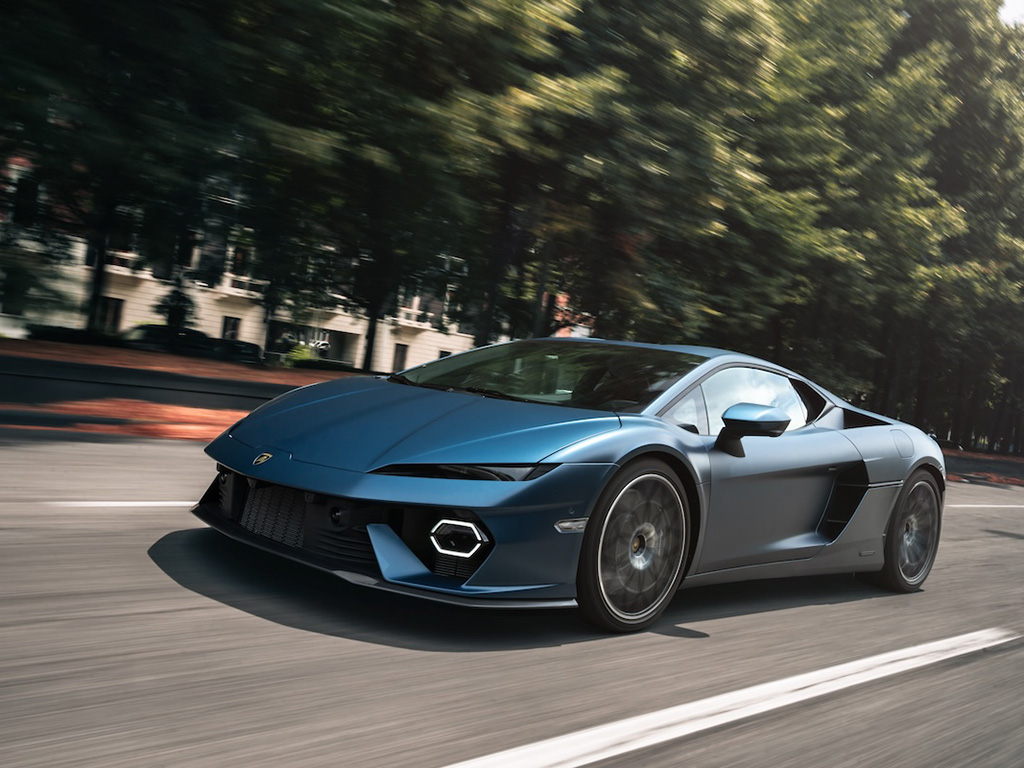
First Drive: 2025 Lamborghini Temerario
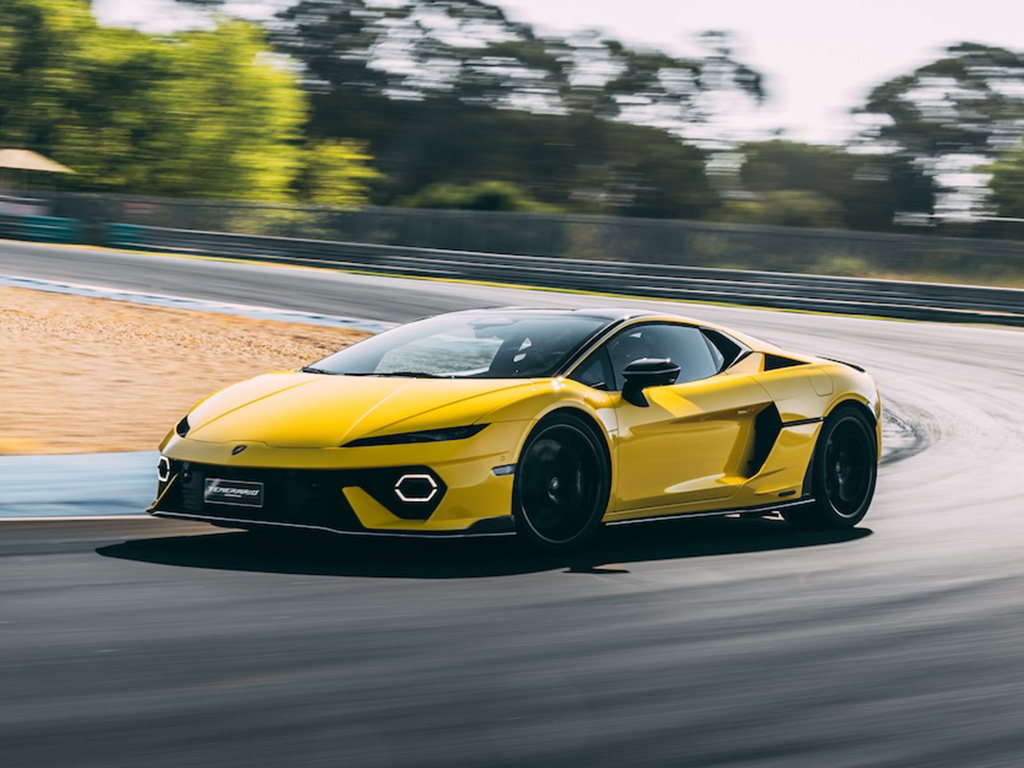
Topping 300kph at the twisty, undulating Circuito Estoril is something I’d never imagined would be possible in a road car.
The last time I was at this track was for the launch of the ultra-rapid McLaren 750S, and the Woking missile briefly squeaked past “only” 280kph down the main straight before having to stamp on the anchors hard for the tight second-gear Turn 1.
Yet here we are in the all-new Lamborghini Temerario, comfortably exceeding the triple-ton for lap after lap. It’s a mind-boggling feat, and so is the car’s ability to rev past 10,000rpm, especially given that it’s a twin-turbo V8 that runs up to 2.5 bar of boost pressure.
The Temerario has big wheeltracks to fill as it’s been conceived to replace the much-loved Huracan, which served as the Bolognese raging bull’s backbone over its decade-long lifecycle. The V10 supercar accumulated 29,000 sales around the globe from 2014 to 2024 – more than double the tally of its Gallardo predecessor.
In order to future-proof the Temerario – from both performance and emission standpoints – Lamborghini had no option other than ditching the Huracan’s charismatic V10, supplanting it with a hybrid powertrain comprising a 4.0-litre twin-turbo V8 and three electric motors.
The whole lot is packaged within a brand-new aluminium spaceframe chassis, clothed by aluminium body panels that have been sculpted according to a fresh styling philosophy by design director Mitja Borkert and his team.

The Temerario is a technological tour de force, but all its cutting-edge trickery comes at a significant cost, as the newcomer will likely command a premium of at least 20 percent over the circa-Dh1m ask for the discontinued Huracan Tecnica when Middle East deliveries commence early next year.
That said, the Temerario’s raw stats – 0-100kph in 2.7sec, 0-200kph in 7.1sec and top speed of 343kph – elevate it virtually to the same echelon as Lamborghini’s V12-powered Revuelto flagship.
The sonorous 5.2-litre V10 was an integral element that defined the character of the much-loved Huracan. With a spine-tingling soundtrack that made the car identifiable from half a kilometre away, the Huracan’s howling sonic signature clearly separated it from its rivals.
Even so, Lamborghini CTO Rouven Mohr says there’s no way the V10 could have been sufficiently modernised and upgraded to achieve the performance increase and clean-running characteristics that were needed for the Temerario.
So, the solution was to develop a brand-new 4.0-litre twin-turbo V8 from scratch, with the lofty aim of making it rev past 10,000 rpm.
The new big-bore/short-stroke engine – designated L411 – is a veritable powerhouse, thrashing out 800 hp from 9,000 to 9,750 rpm and 730 Nm of torque between 4,000 and 7,000 rpm.
An electric motor sits between the engine and the eight-speed dual-clutch gearbox, providing torque in-fill from low revs and through gear shifts, creating the sensation of linear and limitless pulling power all the way up to 10,000 rpm.
Mohr says the only way the V8’s supremely high-revving characteristics could be achieved was by strapping on the biggest IHI turbochargers available from the supplier, ensuring that the motor could be fed with enough air at the dizzying revs it’s capable of.

Given the vibrational forces that result from the V8’s flat-plane crank and high-revving capability, the engine block has been engineered for extreme stiffness, and the powertrain ingredients include titanium conrods and finger followers (these actuate the valves) coated in ‘Diamond-Like Carbon’.
There are also two electric motors on the front axle that can generate up to 300 hp, but their job is not so much to provide propulsion as to enable torque-vectoring. As such, the Temerario essentially behaves like a rear-wheel-drive car to enable it to rotate more readily than its Revuelto big brother.
The other key powertrain ingredient is the 3.8kWh battery pack that’s housed between the two seats (where the transmission would normally reside). It can provide up to 10km of EV-only range in Citta mode, and it’s quickly recharged on the go, even if you’re tapping heavily into its energy reserves during track attacks.
So much for the theory, the good news is that all this high-tech sorcery delivers a driving experience that’s eye-openingly fast, fun and easily accessible by drivers of all levels.
Immediately palpable is the titanic grunt dished out by the hybrid powertrain. With the rear electric motor compensating for the huge lag resulting from the massive turbos, the impression from behind the wheel is of a seeming wall of torque that remains virtually unabated from 2,000 rpm all the way up to 10,000 rpm.
In fact, there’s so much pulling power across the rev range that you have to remind yourself not to upshift too early because, as Mohr says: “The funny part happens after 7,000rpm”.
Even with 920 hp on tap, the Temerario never feels intimidating or unwieldy as its gargantuan thrust is unfurled with supreme linearity and predictability. Traction and directional stability are well managed by the raft of electronic chassis controls and, for the most part, the computerised safety net operates imperceptibly.
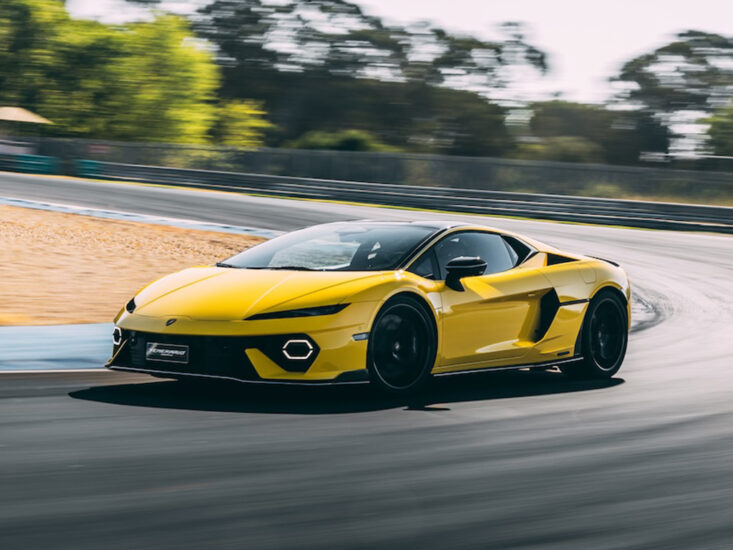
The result is that, virtually right from the outset, you can feel confident in hustling the car briskly around a racetrack.
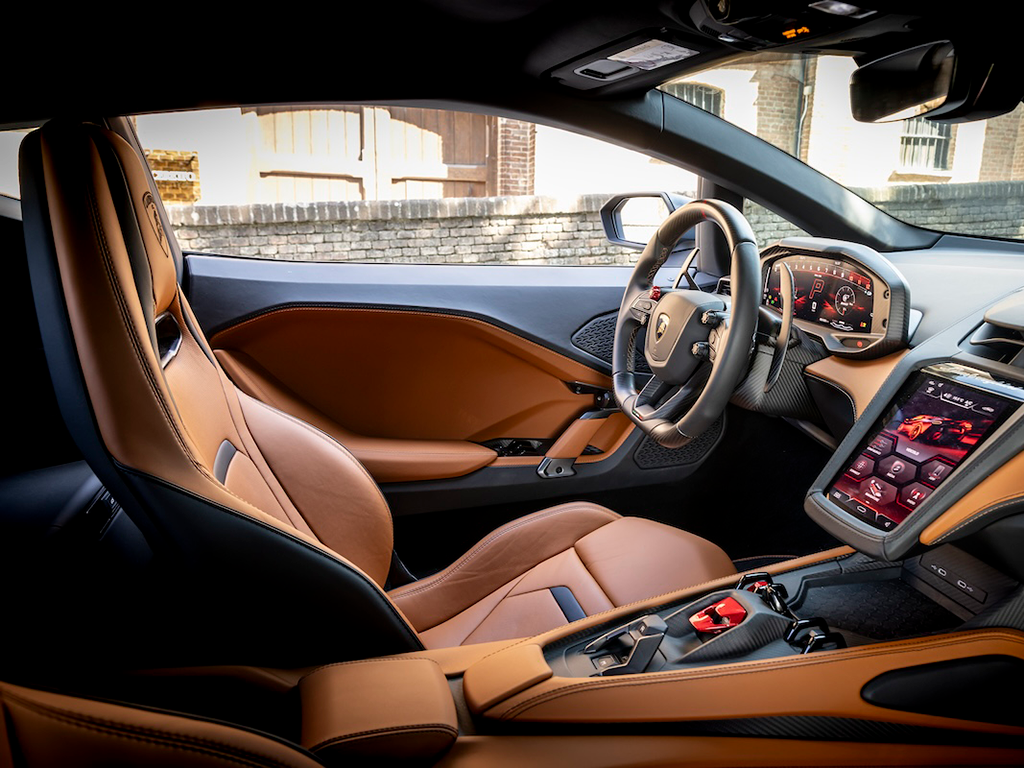
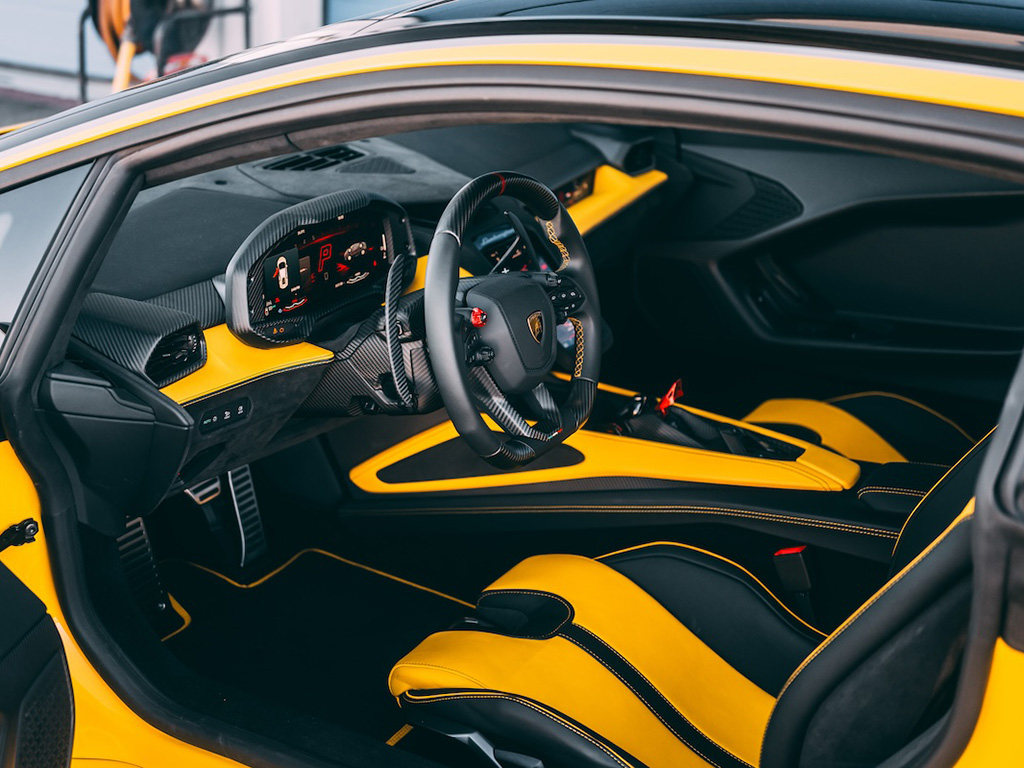
The drive modes accessible via the Anima twist knob on the steering wheel include the sedate Citta (electric-only) and Strada settings, but Sport and Corsa are best suited to track use, with the former allowing a bit more leeway for tail-out antics.
The Temerario is a hefty beast as its dry weight is quoted at 1690 kg – and that’s with the optional Alleggerita carbonfibre pack and carbon wheels. To put its girth into context, the Temerario is more than 200 kg lardier than the Ferrari 296 GTB and McLaren 750S. It’s also more than 140 mm longer and 60 mm wider than its Huracan predecessor.
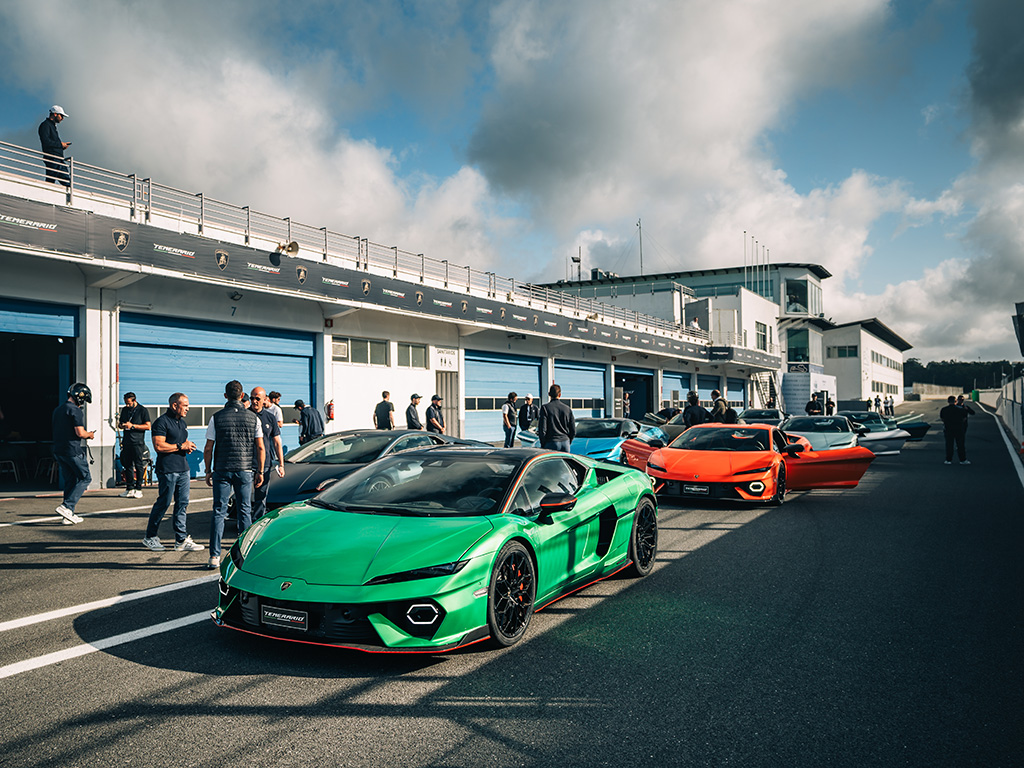
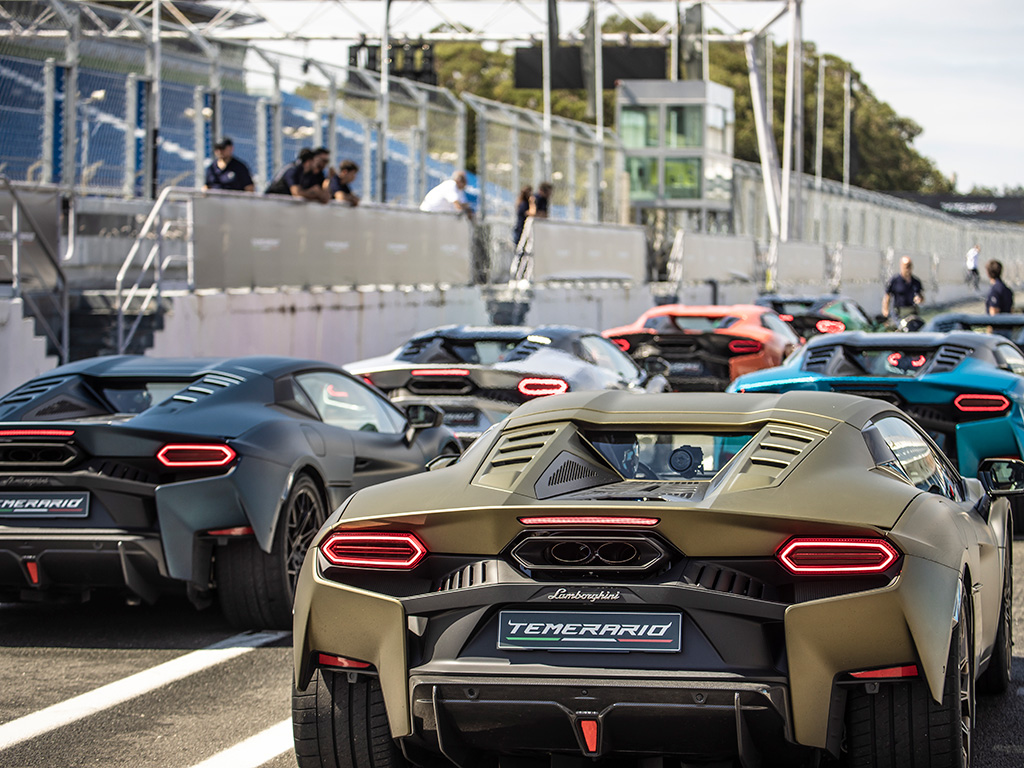
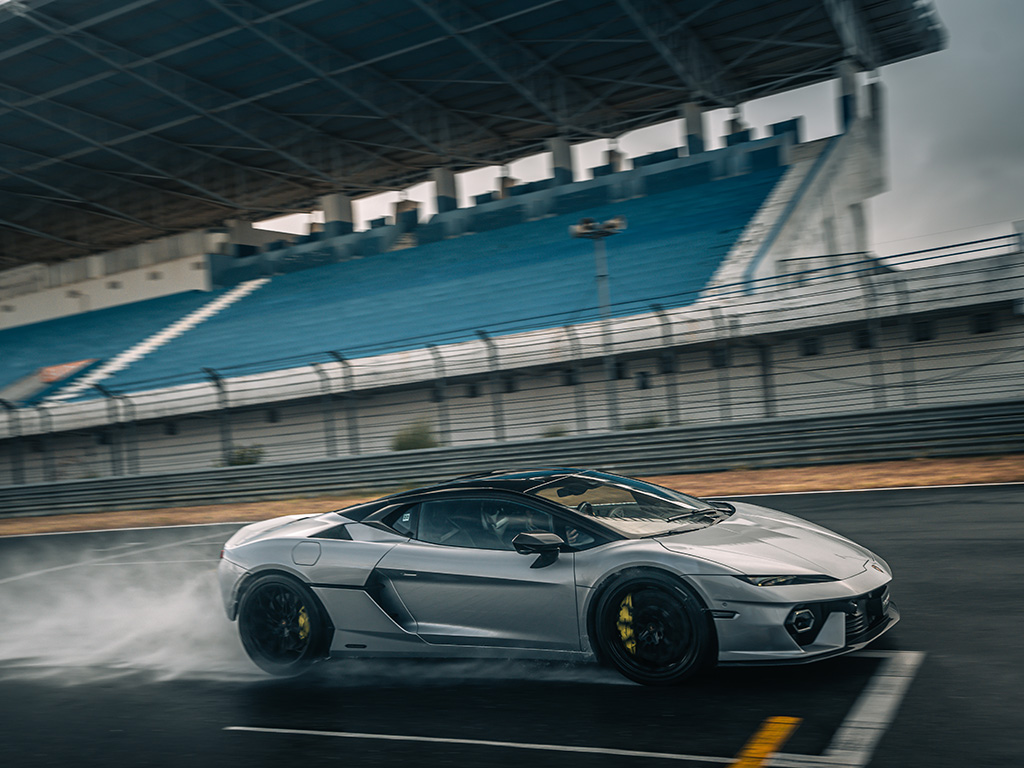
That said, the Lambo hides its mass well, showing a keenness to turn into even the many tight hairpins that form part of the Estoril circuit layout. The rear-steer and torque-vectoring provided by the front e-motors no doubt play a role here, even though you don’t sense from behind the wheel that there are so many mechanised gubbins at work beneath the surface.
The Temerario is a benign and forgiving car, compensating seamlessly even if you dive into a corner too hot or get on the gas too hard and too early in mid-corner. The torque-laden hybrid powertrain also enables the car to launch out of slow corners with an urgency that no Huracan variant (even the hardcore STO) could come close to approaching.
The brakes – huge 410 mm carbon-ceramic discs with 10-piston calipers at the front and 390 mm stoppers at the rear – provide mighty retardation, and even though some of the deceleration is provided by the energy recuperation system, you can’t perceive this split through the brake pedal.
While the media launch program didn’t include an on-road drive component, our impression is that the Temerario would be a more relaxing long-distance companion than the Huracan.
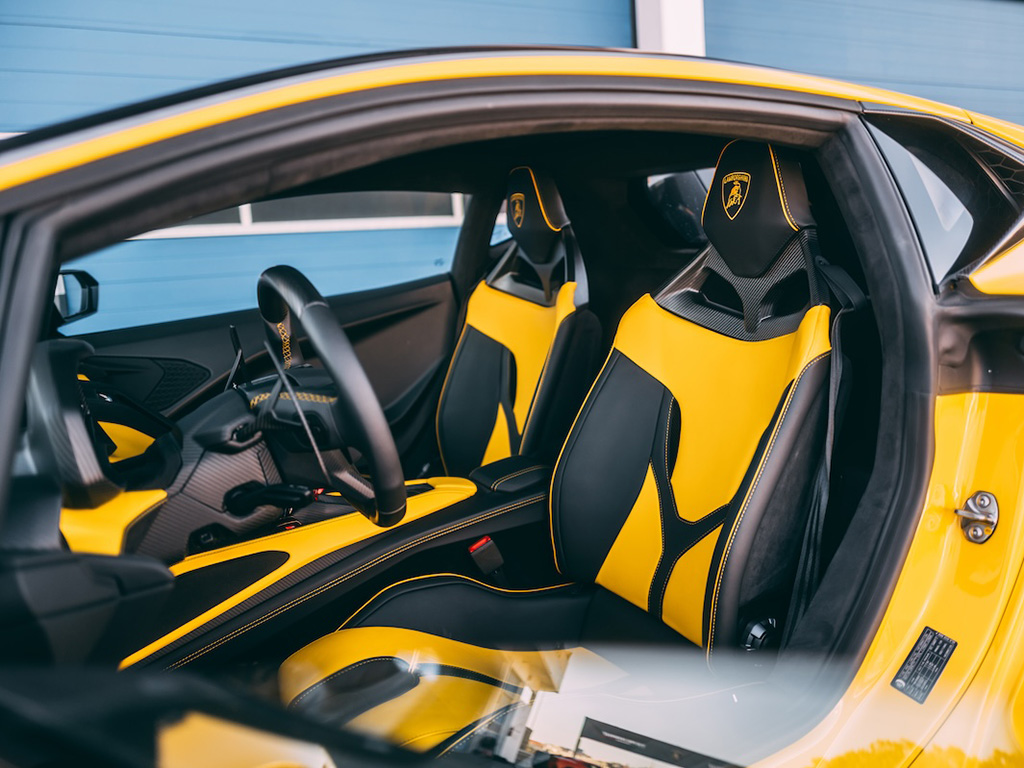
Its added cabin comfort and substantially lower noise levels are already a plus in that regard, and space for two aircraft cabin trolley bags in the ‘frunk’ – as well as room for a couple of soft bags behind the seats – make it a realistic weekend getaway car.
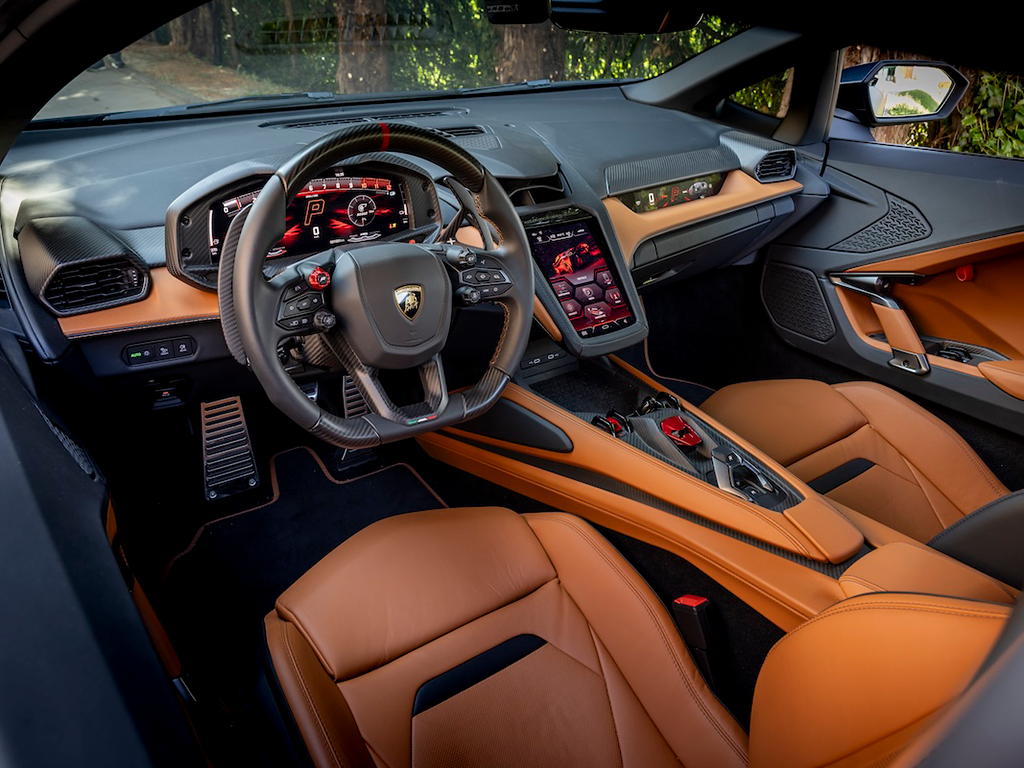

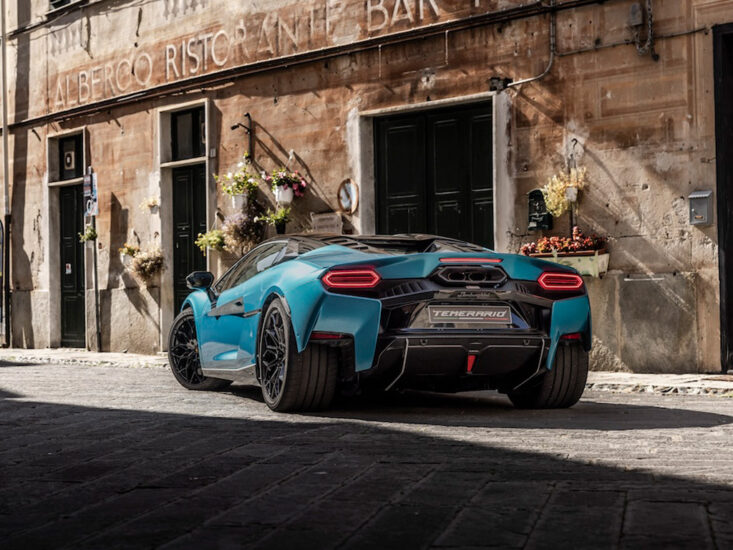
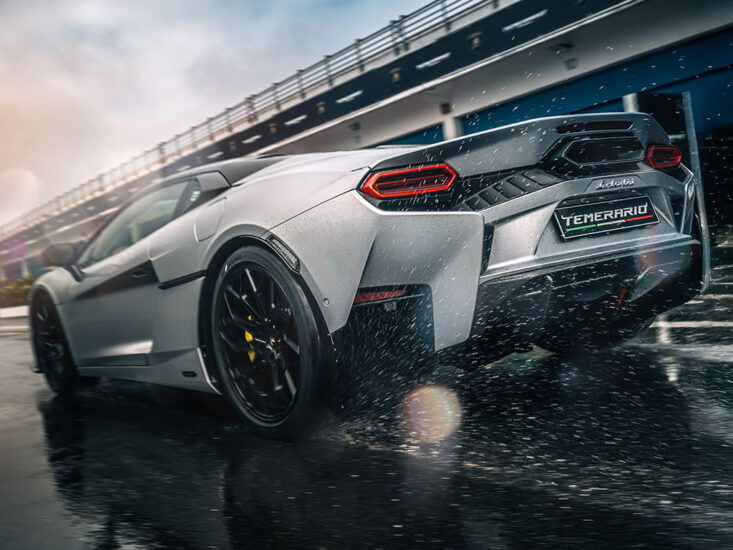
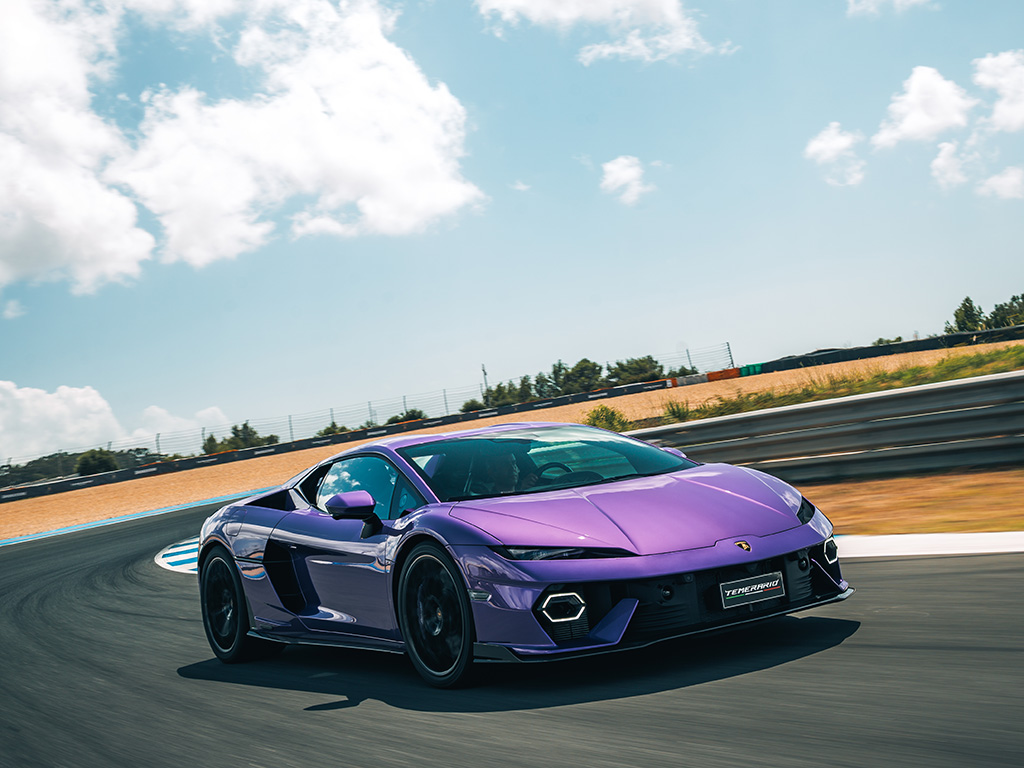
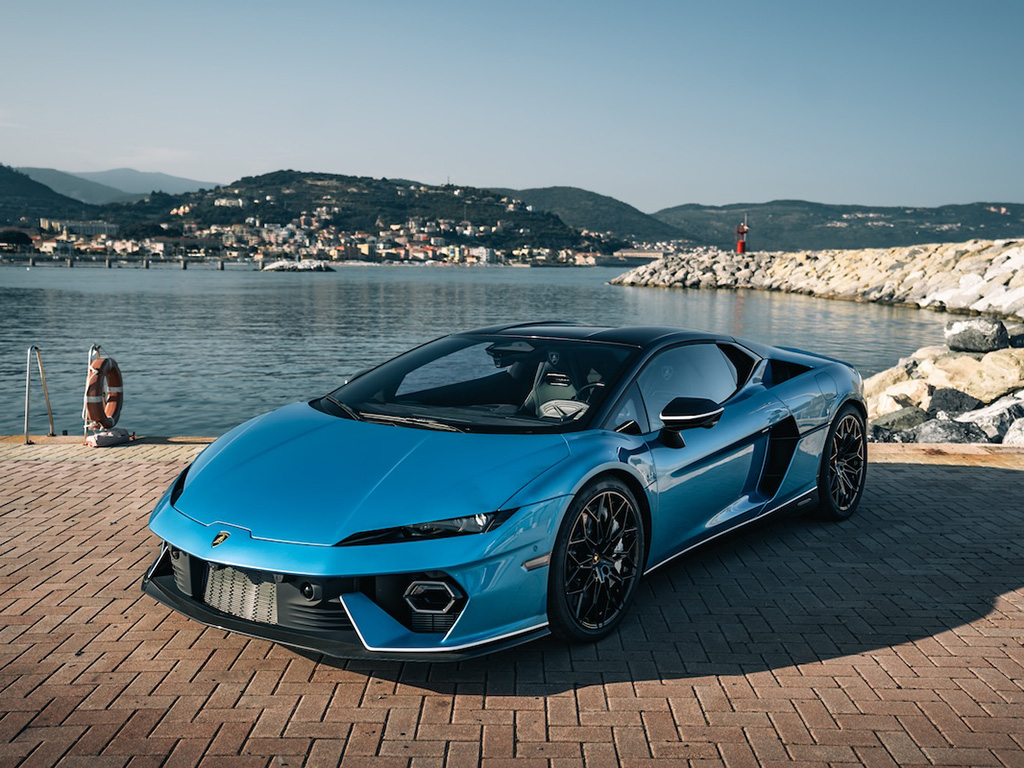
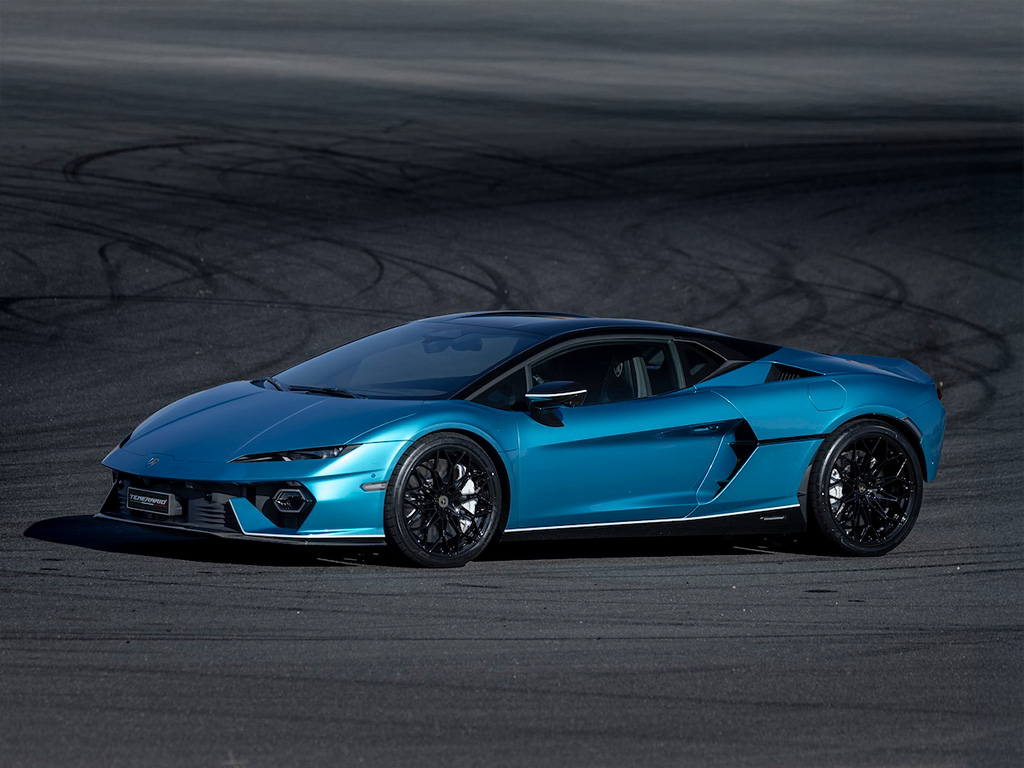
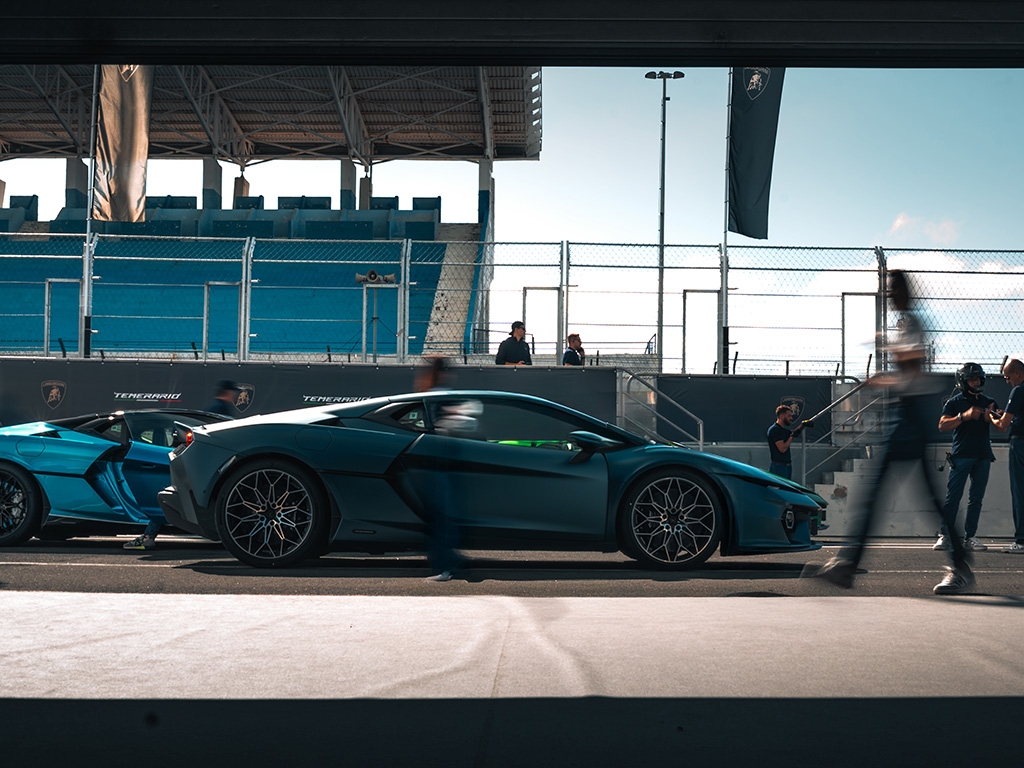
Styling is always a highly subjective area, but there’s much to like about the Temerario’s visuals. With more subtle curves and smoother contours than the punch-you-in-the-eyeballs Huracan, it comes across as a more classical design than the V10 supercar.
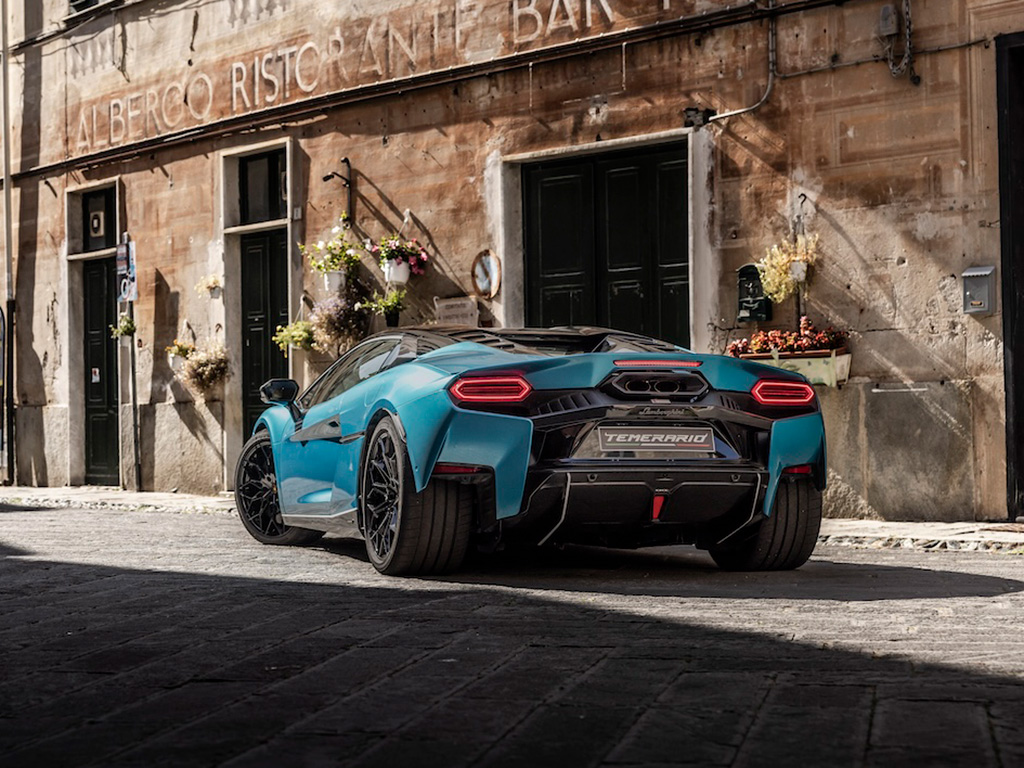
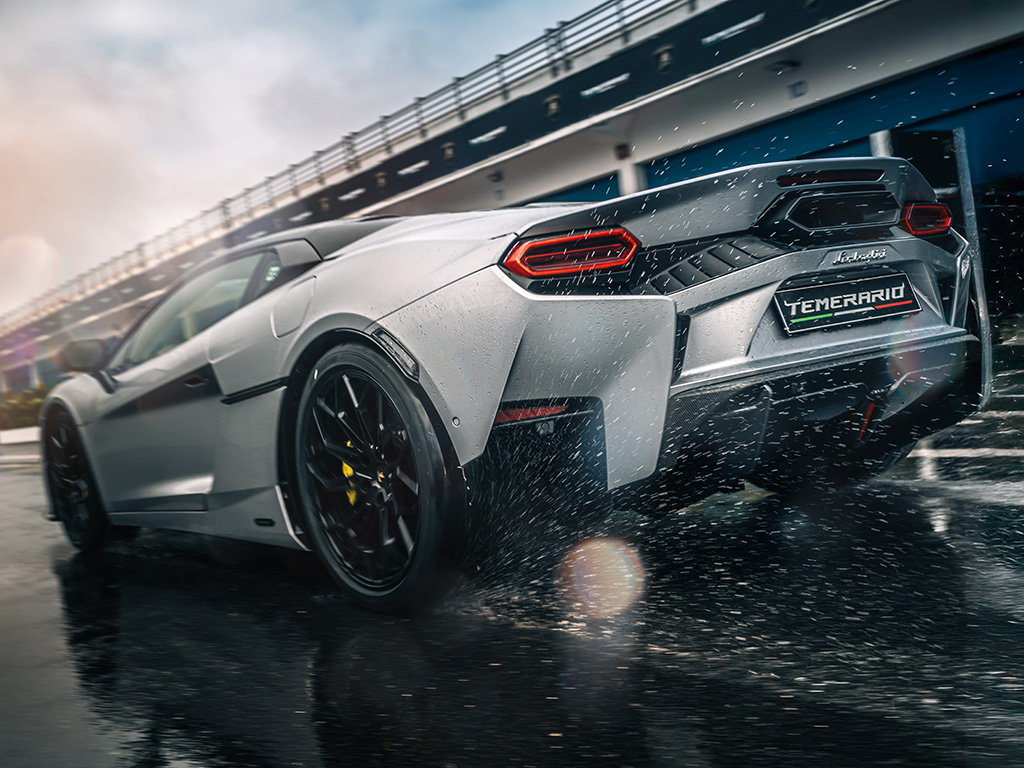
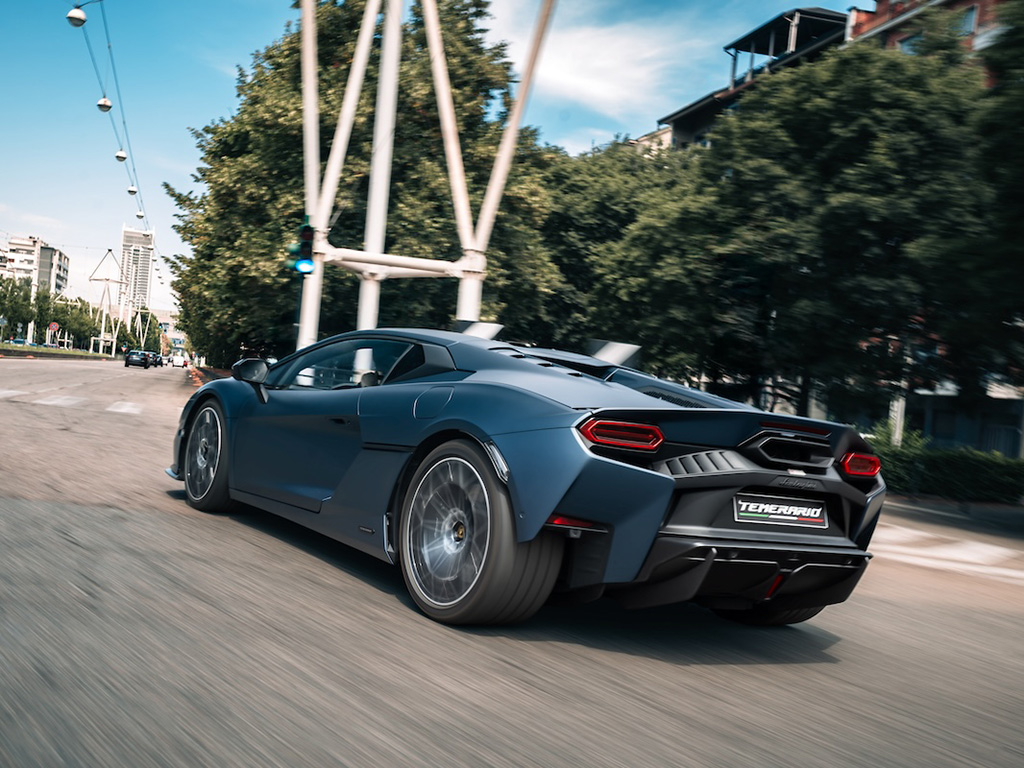
There’s still plenty of aggression, though, especially when viewed from the rear-three-quarter angle. The sharp cutaways behind the rear wheels, race-inspired diffuser and gaping hexagonal exhaust exiting between the taillights all combine to portray a don’t-mess demeanour.

Now for the gripes…
While Lamborghini has succeeded in creating a well-rounded supercar on so many levels, what’s sorely lacking is the aural drama of the Huracan. Yes, the twin-turbo V8 has a pleasingly hard-edged note when you give it the beans, but it lacks the sheer vocal charisma of the discontinued V10. That motor made the hairs on the back of your neck stand on end.
And while the Temerario’s performance and dynamics are stupendous, it can’t match the superlative delicacy of the Ferrari 296 GTB or McLaren 750S when it comes to textured steering feel. These two rivals also have a balletic agility that stems more from their lighter weight and sublimely balanced rear-wheel-drive chassis than from clever torque-vectoring systems.
Lastly, if you’re the type of buyer who wants each hard drive – be it on track or a winding mountain road – to leave your heart palpating and nerves on a ragged edge, you might want to look elsewhere. The Temerario is exhilarating to punt at pace, but it’s not going to scare you in almost any situation.
Overall, though, Lamborghini has got so much right with the Temerario.
It’s mind-bogglingly rapid, terrifically engaging to drive hard and, although we can’t confirm it at this stage, we suspect it will also be much more usable and pleasant to drive out in the real world than its Huracan forerunner.
That said, the competition is fierce in this segment, and whether you prefer the unique recipe that the rev-happy Temerario serves up to what’s offered by the likes of the Ferrari 296 GTB, McLaren 750S and Porsche 911 Turbo S depends on your priorities.
For what it’s worth, we think Lamborghini has nailed much of the key supercar criteria with the Temerario, and the 920hp rocketship seems well poised to replicate the longevity and sales success of the Huracan.
Lamborghini Temerario specs
Powertrain
Engine: Twin-turbo V8 (“Hot V” layout)
Hybrid system: Three axial flux motors and a 3.8kWh battery pack
Engine displacement: 3995cc
Bore and Stroke: 90mm x 78.5mm
Compression Ratio: 9.3:1
Max power (ICE): 800hp @ 9000-9750 rpm
Max power (combined ICE+E-motors): 920hp
Max torque (ICE): 730Nm @ 4000-7000 rpm
Transmission: 8-speed dual-clutch
Tyres: Bridgestone Potenza Sport 255/35 ZR20 (front); Bridgestone Potenza Sport 325/30 ZR21 (rear)
Rims: 20 x 9J (front); 21 x 11.5J (rear)Braking system: CCB Plus (Carbon Ceramic Brakes Plus) brakes with fixed monoblock calipers in aluminium with 10 pistons (front) and 4 pistons (rear)
Front Brakes: 410x38mm discs
Rear Brakes: 390x32mm discs
Dimensions
Length: 4706mm
Wheelbase: 2658mm
Width: 1996mm
Height: 1201mm
Dry Weight: 1.690kg with optional Alleggerita carbonfibre pack and carbon wheels
Performance
0-100kph: 2.7sec
0-200kph: 7.1sec
Top speed: 343kph

There are no comments. Be the first!