Stellantis MEA outlines “Fastlane 2030” growth strategy
Stellantis Middle East & Africa has outlined its “Fastlane 2030” strategy for the region, with plans to increase revenues by 40% while maintaining a double-digit operating margin.
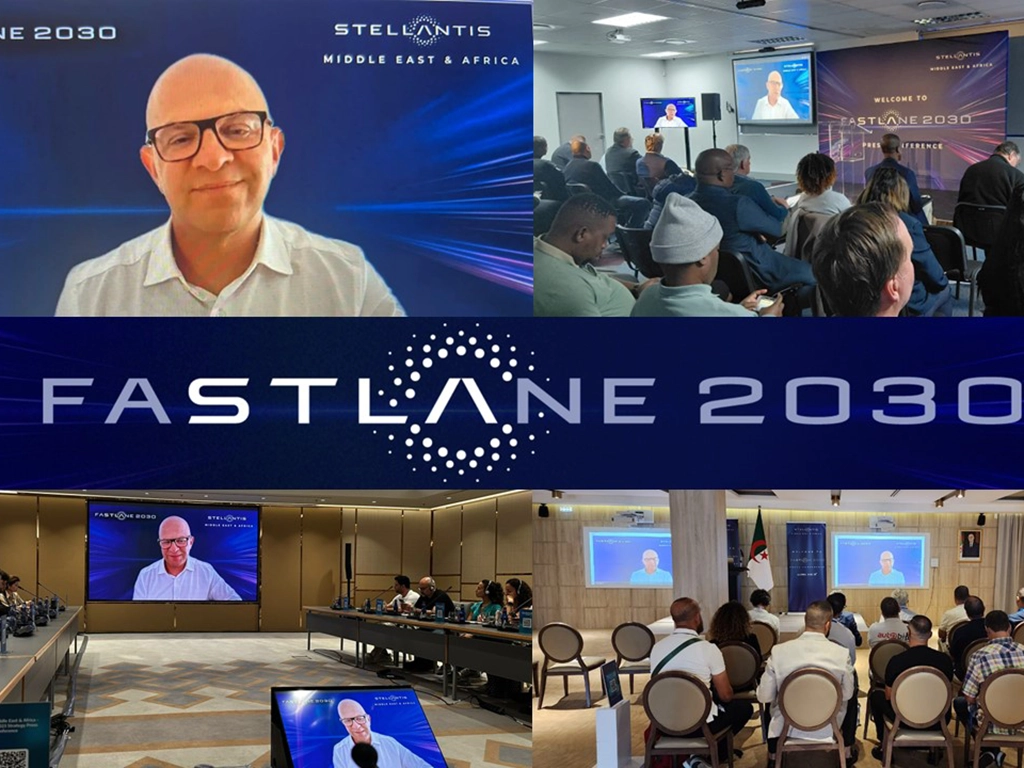
The strategy was presented during a regional press conference led by Samir Cherfan, Chief Operating Officer for Middle East & Africa, bringing together automotive and business media from across the region.
Focus on regional growth
Stellantis said the Middle East & Africa region remains a key part of its global growth plans. The company currently ranks second in the region for the fourth consecutive year, selling more than 500,000 vehicles annually while maintaining double-digit profitability.
The company highlighted MEA as one of the fastest-growing automotive regions globally, representing around 25% of the world’s population today and projected to account for 40% in the coming decades.
“Middle East & Africa is a central pillar of Stellantis’ growth strategy. We are already operating at scale with strong profitability. With Fastlane 2030, we are accelerating execution by transforming our sourcing, maximizing our industrial footprint and deploying a focused product strategy to capture the region’s full potential,” said Samir Cherfan.
New sourcing strategy
A major part of the Fastlane 2030 plan is a shift in vehicle sourcing. Stellantis aims to have 90% of its regional sales come from 22 competitive carlines that will either be localized in the region or imported from Asia.
The company expects this approach to improve competitiveness across different segments and markets, while allowing it to respond more directly to regional demand.
Stellantis said the transformation is already underway and is expected to reach around 75% execution by 2028.
Local production and Asian imports
The 22-model strategy will be supported by annual investments of around €300 million, leveraged through partnerships and co-investments. Half of these models are expected to be produced locally, while the remaining models will be sourced from Asia.
In the Mediterranean region, Stellantis will make use of its plants in Morocco and Turkey, which have a combined production capacity of 800,000 units. The company also plans to strengthen its market leadership and restore Fiat’s momentum in Turkey.
In Algeria, Stellantis will continue expanding its manufacturing base through deeper localization. For the Middle East and South Africa, the focus will be on improving performance by adding competitively sourced vehicles and increasing localization where possible.
Long-term regional presence
Through Fastlane 2030, Stellantis aims to combine local manufacturing, competitive sourcing, focused investments and a more efficient product plan to drive profitable growth across Middle East & Africa.
The company said the strategy is designed to strengthen its long-term presence in the region while also contributing to local economies through industrial development and partnerships.

Comments are closed. Please send an email if you have any feedback.