
Lamborghini chalks up two decades of Centro Stile in style
Lamborghini recently staged a mega 20th birthday celebration for its Centro Stile design department at its Sant’Agata Bolognese headquarters, and the event was graced by a host of car design luminaries, including Fabrizio Giugiaro and Laurens van den Acker, to name just two. A stunning backdrop was provided by a parade of Lamborghini’s “few-off” cars, such as the Sesto Elemento, Reventon, Veneno, Sian and modern-day Countach LPI 800-4.
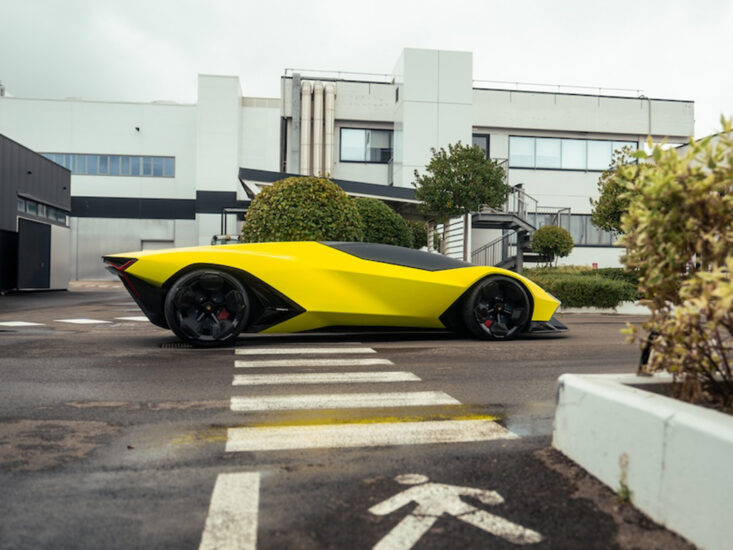
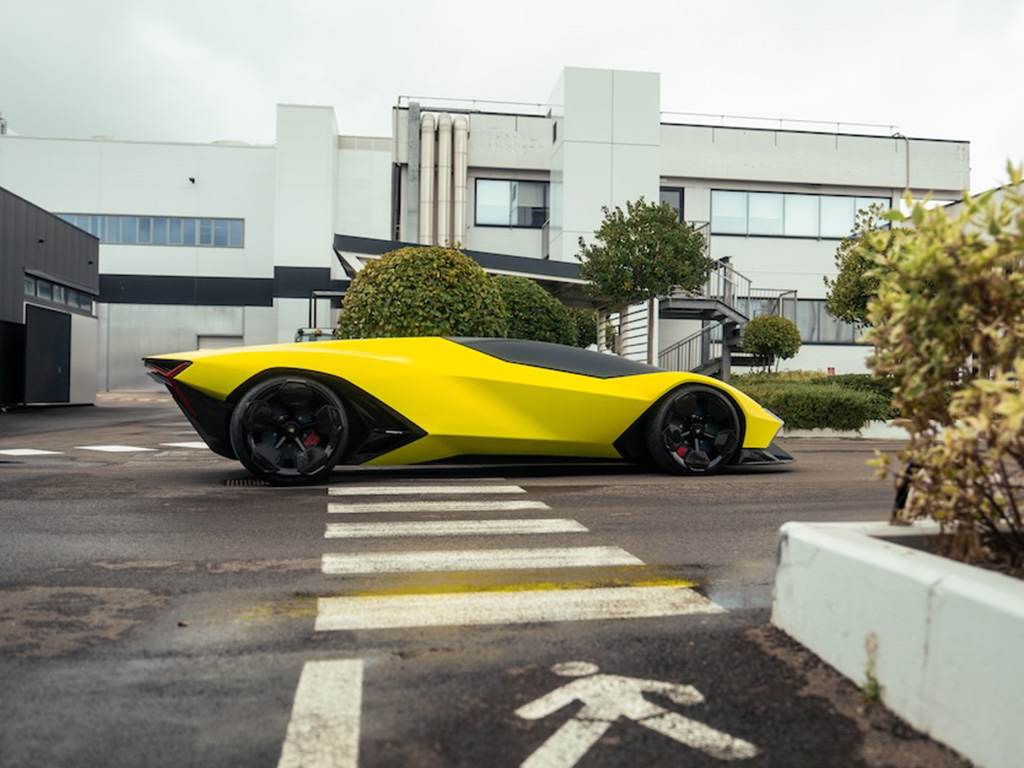
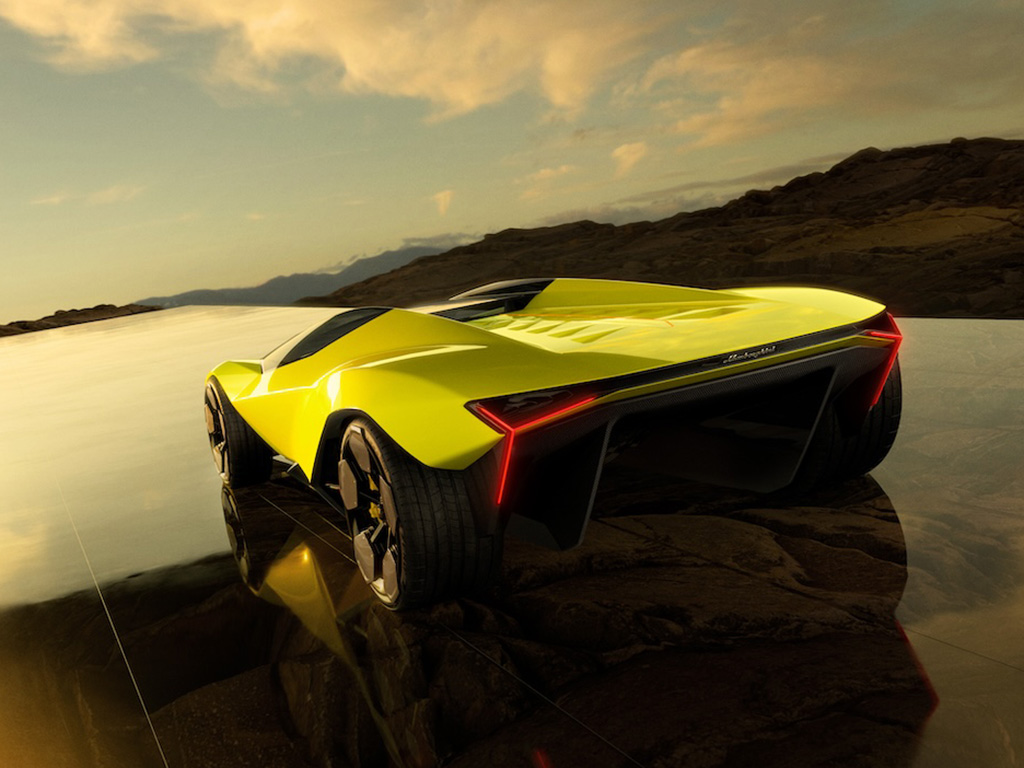
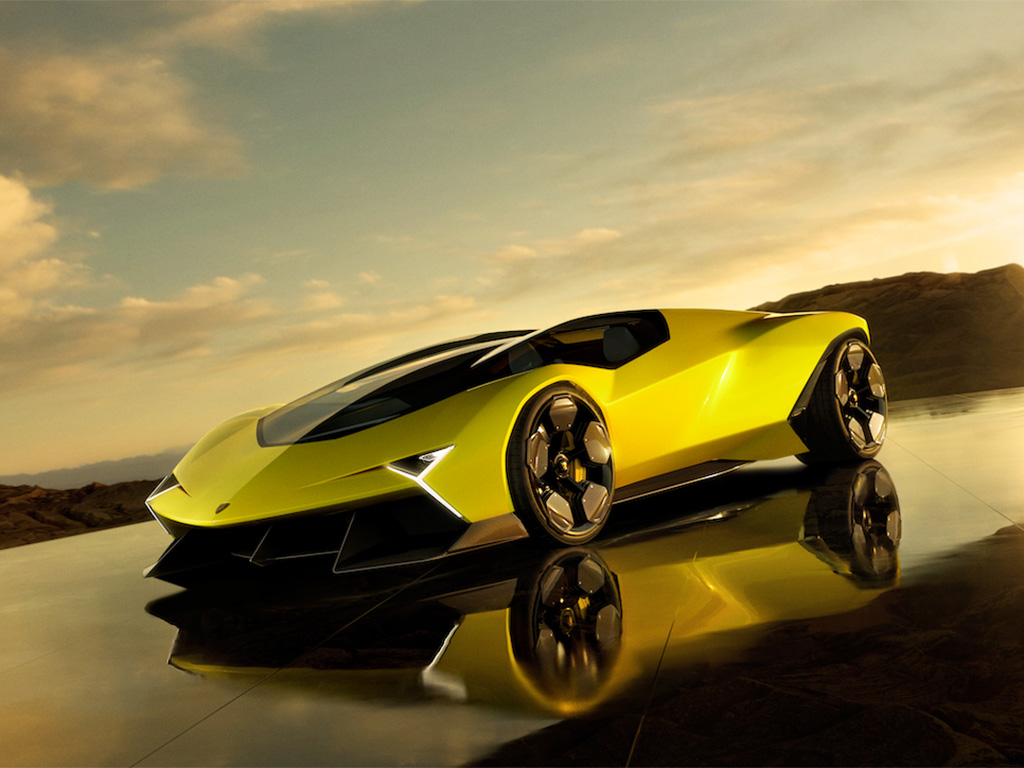
But arguably the real star of the evening was the curvaceous and futuristic Manifesto concept, which Lamborghini design director Mitja Borkert describes as a “compass of the future” for the brand.

“We wanted to try a more puristic shape,” says Borkert. “The Manifesto is purely a statement of design and shape. There is no discussion about a V12 engine or electrification. It’s a study to see what are the new ways to treat the surfaces of a Lamborghini.
“We have the familiar shark nose and Y-shapes in this concept, but we wanted to try more athletic shapes. This concept even influenced the Fenomeno, as on that car you can see more human shapes.”
Design has been a Raging Bull trademark since the carmaker’s inception in 1963, and company founder Ferruccio Lamorghini knew how important the visuals of his eponymous cars would be when setting up the brand in 1963.
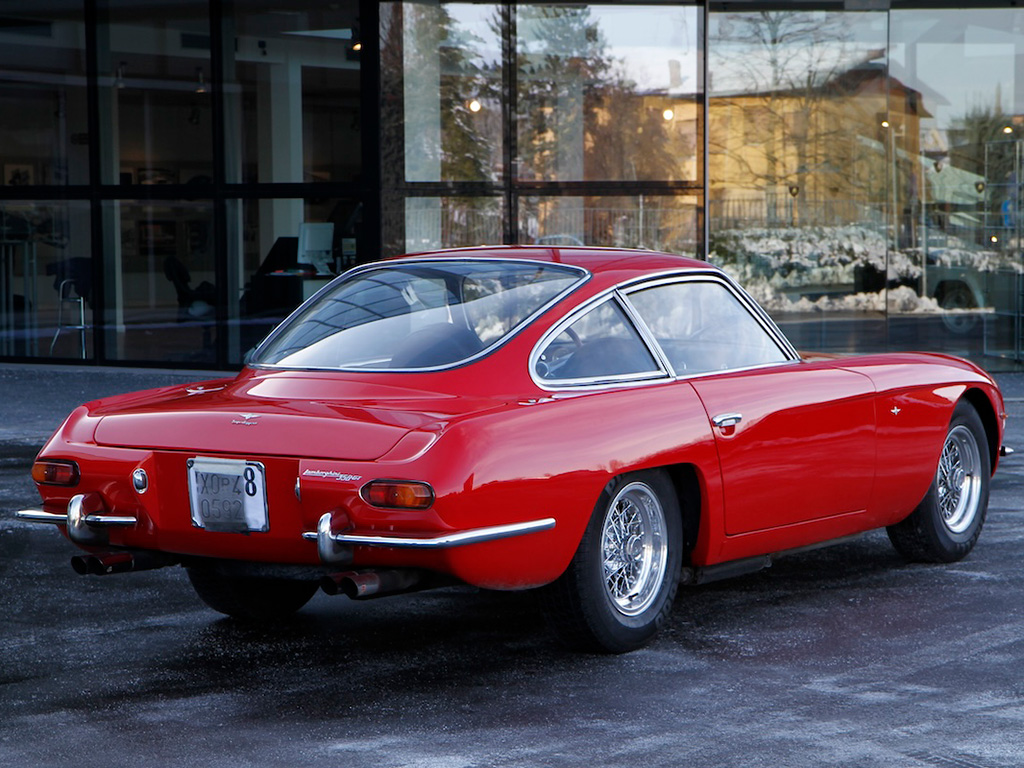
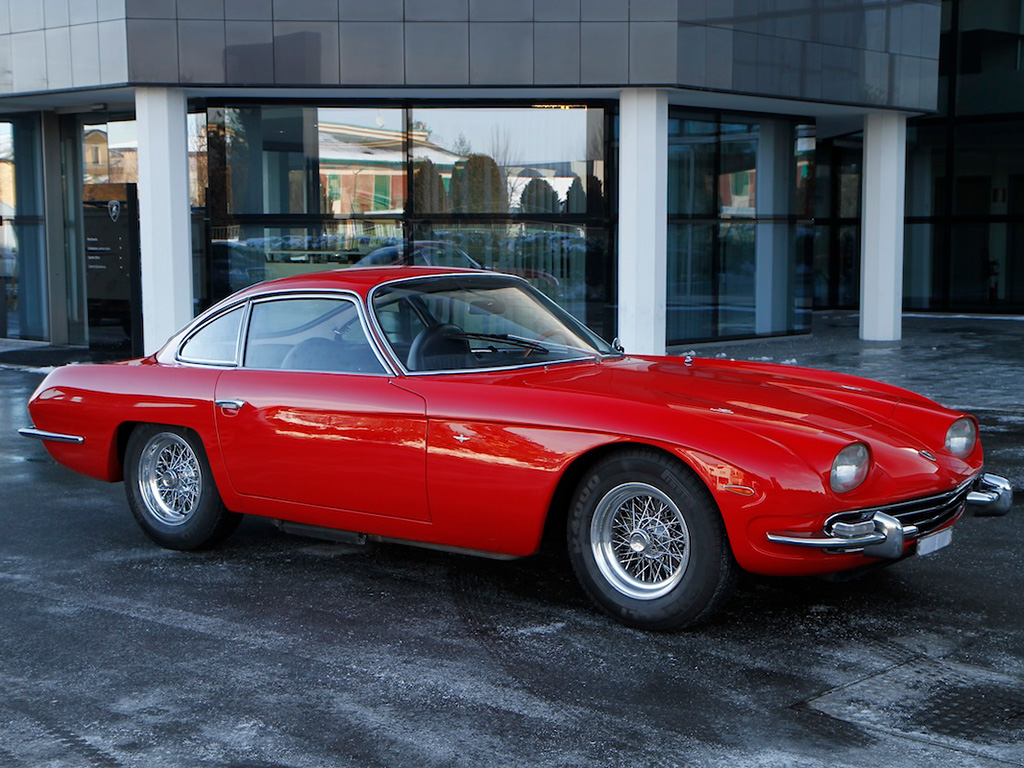
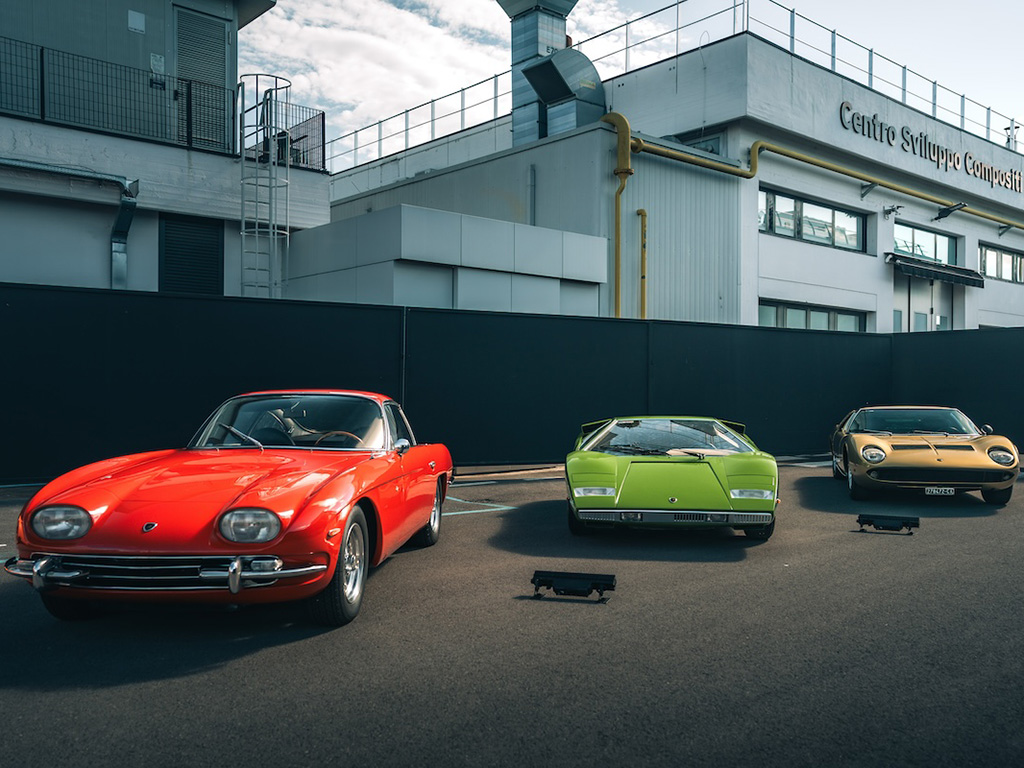
He subsequently commissioned Franco Scaglione for the company’s first prototype – the 350 GTV – and then turned to Milan’s Carrozzeria Touring for the first production 350 GT and its evolution to the 400 GT.
The 1966 Miura, penned by Marcello Gandini at Carrozzeria Bertone, might well be regarded by some as Lamborghini’s ultimate poster car, but the brand’s enduring design language was forged instead by the ultra-futuristic 1971 Countach, whose sharp edges and wedge-like profile set the tone for everything that followed.
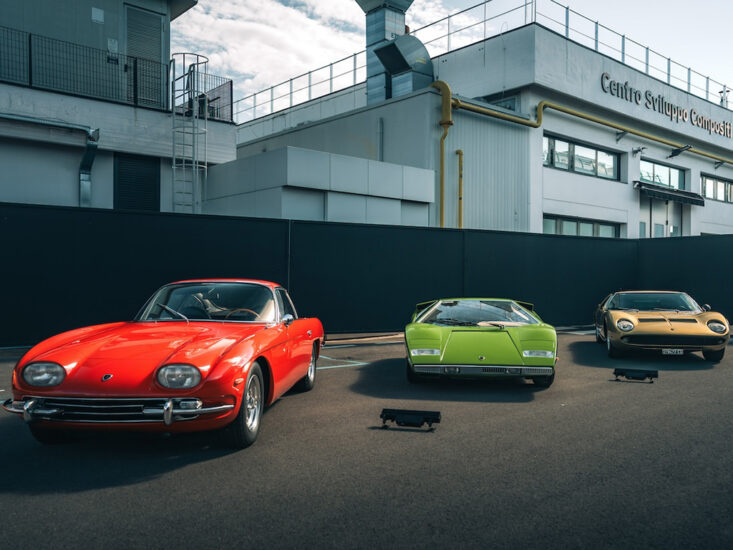
Although the Bolognese Raging Bull continued to outsource design of its cars for the next three decades, a major turning point came in the early 2000s as Audi’s then brand group head of design, Walter de’Silva, recommended to the board of Audi and Lamborghini that an in-house design centre should be established for the Italian super sportscar marque.
The new Centro Stile was subsequently announced during the 40th anniversary celebrations in 2003, a decision that reflected his vision of preserving Lamborghini’s DNA through creative independence and a long-term stylistic strategy.

Belgian style-meister Luc Donckerwolke was chosen to head the department and the ground-breaking Murcielago and Gallardo were created under his stewardship. Donckerwolke’s talent as an automotive designer was enhanced by his passion and emotional engagement with the brand, with both new cars setting the tone for a more modern, muscular design language with purer lines and clean taut surfaces.
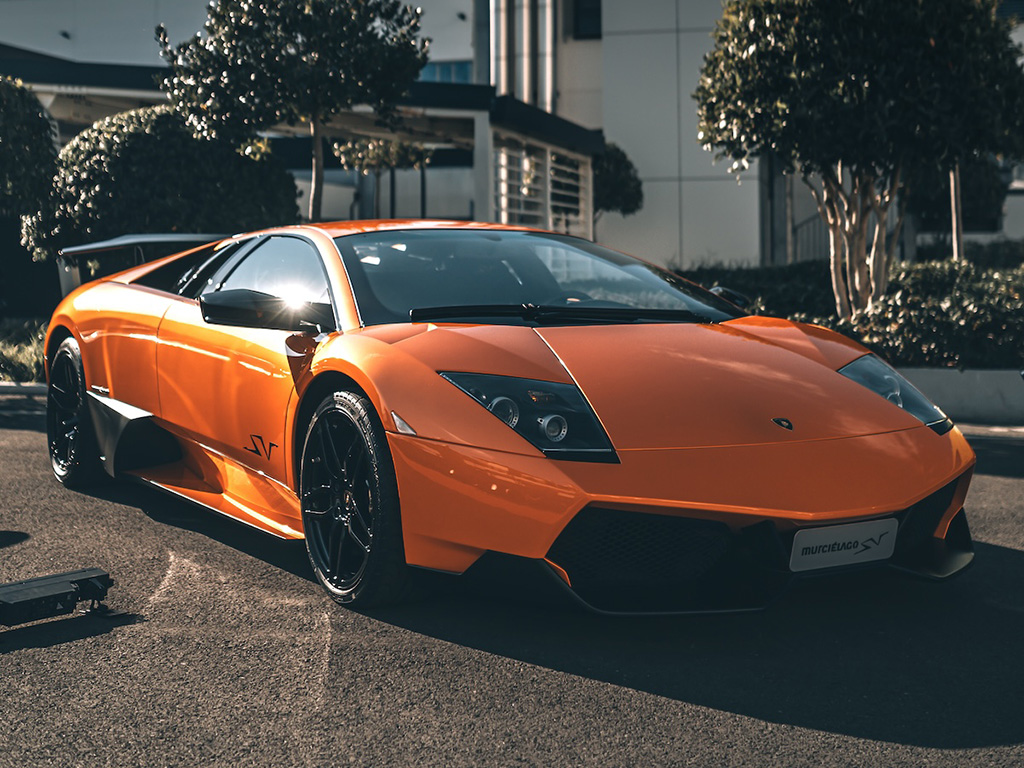
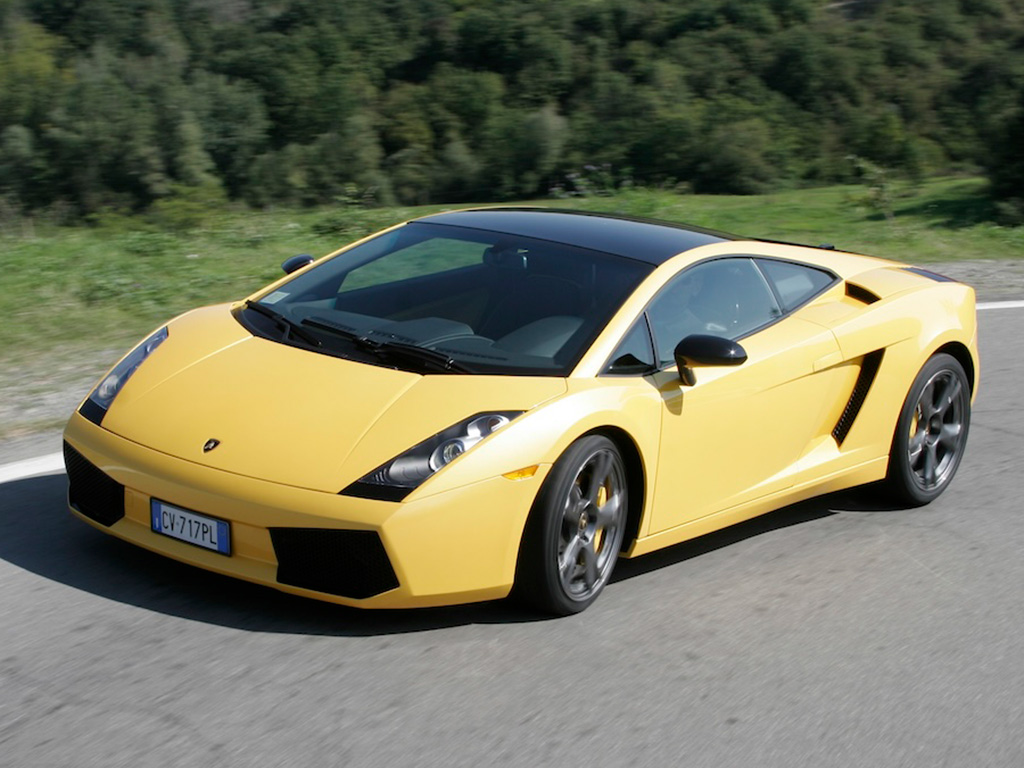
“The Murcielago was an extraordinary design advancement,” says Borkert. “I personally remember seeing it at Geneva motor show and instantly recognised the emotion and presence of the Lamborghini brand.
“It delivered a pure expression of Lamborghini styling and set the principles of ‘form follows function’ in the way it delivered advanced design and engineering for Lamborghini’s V12 flagship model.”
The Lamborghini design baton was subsequently passed from Donckerwolke to Fillipo Perrini, under whose watch the stunning Aventador and Huracan were created.
Mitja Borkert took over as director of design in 2016, and his principal handiworks to date are the Revuelto and Temerario, along with the Huracan STO, Huracan Tecnica, Urus SE and numerous concepts and “few-off” cars. With Borkert’s arrival, the Centro Stile entered a new era, increasing its studio space two-fold, and growing its international team members to 25.
“Lamborghini is built on performance engineering and design, and the two go hand in hand,” Borkert explains. “With R&D in house, design must be too. Over the last 20 years the Centro Stile has written the rule book for Lamborghini’s design DNA, its structure and function, which is the genetic blueprint for our brand.”
Borkert describes the early 2000s as “a time of exponential innovation.” He adds, “The in-house Centro Stile function allowed designers to think creatively but strategically in a team environment and, as importantly, work closely alongside other departments in a very dynamic way.”
This period marked an era of exceptionally fast-paced design and development, picking up from work started under Donckerwolke and de’Silva, who had also developed cars such as the Concept S and Miura Concept respectively, and early progressions of the Murcielago including the roadster.
Under Perini an evolved Murcielago LP 640 was launched in 2006 followed by a roadster and the LP 670-4 SuperVeloce in 2009, with evolutions and derivatives of the Gallardo powertrain and dynamics across Spyder, Superleggera and Performante versions.
“Perini continued the in-house design strategies started by Donckerwolke but, like every head of design, brought his own inspiration to projects during a remarkable time for the company, during which the Centro Stile was a central force,” says Borkert.
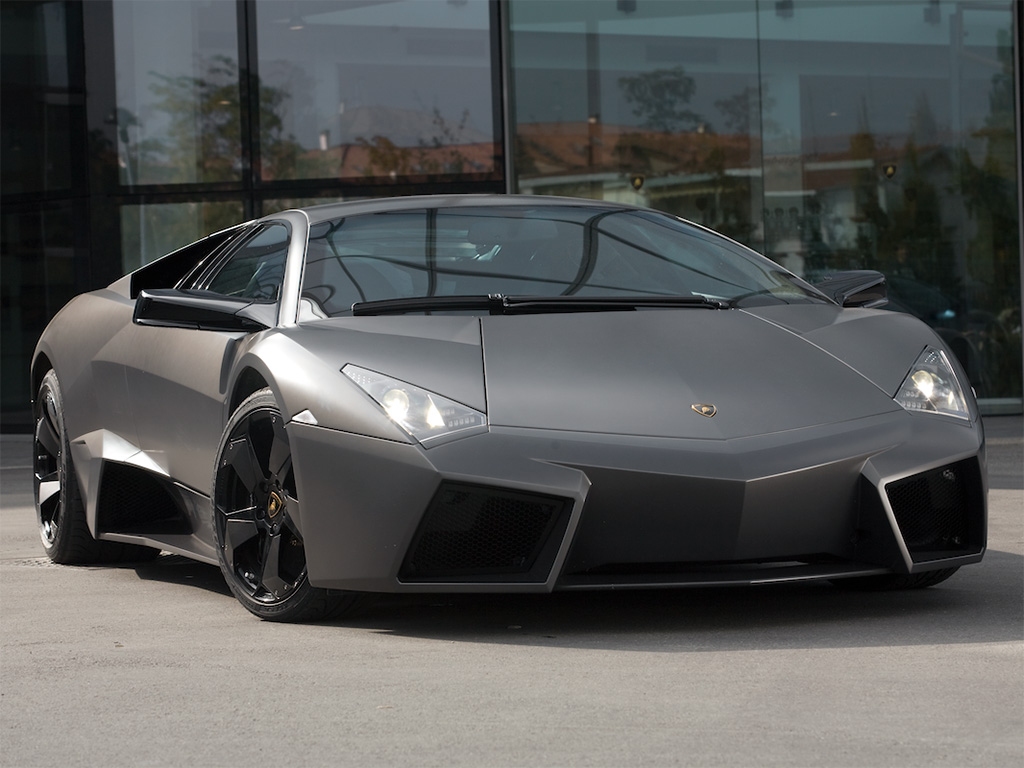
“The V12 Reventon in 2007 was an essential moment; it was the first few-off car based upon a current platform but delivering a distinctive new design and next-level performance. Perini drew on aeronautical inspiration for the sharper lines and more aggressive features and adopted the now-familiar hexagon and Y motifs.
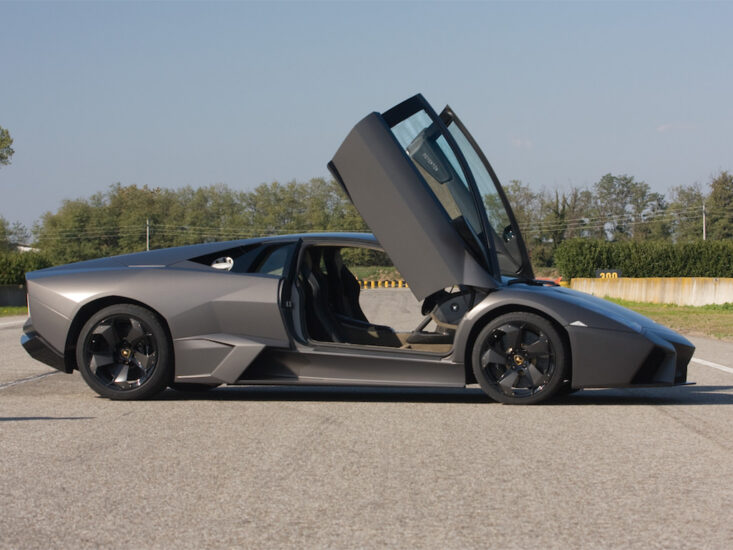
“The approach to Reventon’s styling, material use and iconic details were recognised as a design hint towards next-generation production models: a tradition that remains with limited edition, one-off and few off models today created by the Centro Stile today.”
Perini and a small Centro Stile team of just seven was responsible for design of a fundamental new Lamborghini: succeeding the Murcielago, the Aventador was designed and developed entirely in-house and launched in 2011 and significantly moved on the Lamborghini design language, presenting breathtaking complexities of lines and surfaces.
“Concept and few-off cars give the Centro Stile design team an opportunity to truly spread their wings, to ask questions of design, to not limit the imagination in what is possible,” says Borkert.
“The Centro Stile ethos is to take inspiration from what interests and thrills: the roofline of the Aventador was inspired by beetle wings, separated along the median axis yet enveloping the body.
“Each head of design has their own vision, their own personality, their own way of developing ideas. Perini was attuned to a digital world, whereas I like physical models,” Borkert explains. “But seeing how the world has evolved over the last two decades reminds us how we must be open to embracing the developments of the next 20 years,” says Borkert.
“I remember being amazed by 3D printing experiments. Now we use it all the time, even to create production car components. We are looking at AI, of course, to see how that can work for us, with the final decision always a human one. But the principles of Lamborghini Centro Stile mean we must always be curious, questioning the status quo.”
Borkert says being a visionary is part of the job description of director of Centro Stile Lamborghini, adding: “We set the trends, we don’t follow them. We must always look ahead – to next year and the next 20 years. It is ingrained in everything that we do. It is the ethos of Lamborghini to always question the status quo but within the framework of Lamborghini design DNA, which is remarkably unrestrictive.”
Top 5 Lamborghini “few-off” models
Lamborghini has crafted an extensive catalogue of “few-off” limited edition models over the past two decades. Here’s our top five…
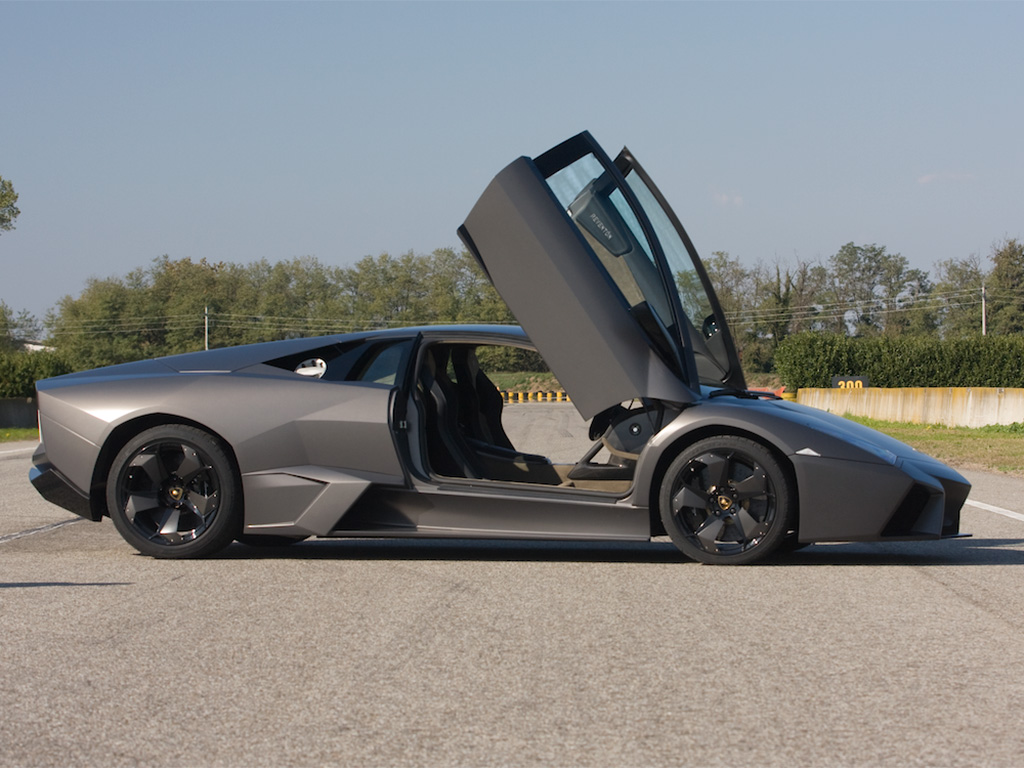
Lamborghini Reventon (2007)
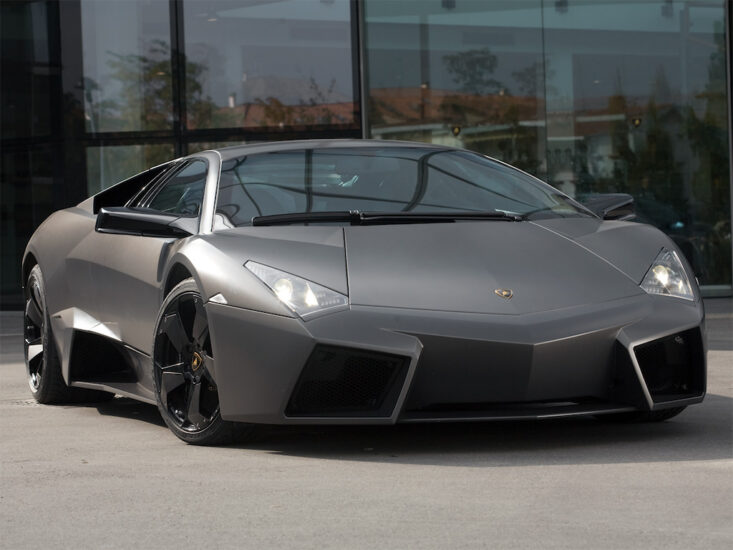
The Reventon was presented to the public at the 2007 Frankfurt Motor Show and was the first of Lamborghini’s “few-off” cars. Just 20 examples were sold, with a price tag of €1m before taxes. Even though the Reventon shared its core architecture with the Murcielago, the two cars differed markedly in their visuals. Fronted by a sharp-edged shark nose, the Reventon provided distinct clues to the Aventador that would follow four years later. The body was made entirely of carbonfibre and was fitted with an active rear spoiler that moved into three positions, depending on the speed.
Lamborghini Sesto Elemento (2010)

The Sesto Elemento (“sixth elemento”) bowed at the 2010 Paris motor show, debuting an array of cutting-edge measures that kept its weight down to just 999kg – a remarkable feat, given that the Sesto Elemento was equipped with the 5.2-litre V10, six-speed sequential gearbox and all-wheel-drive chassis from the Gallardo. No less than 80 percent of the car was fabricated from carbonfibre, including the chassis, body, driveshafts, wheels and suspension components. Lamborghini had planned to build and sell 20 cars for track use only, priced from €1.6m. It’s believed only 10 examples ended up being built, although this was never confirmed by the carmaker.
Lamborghini Sian FKP 37 (2019)

The Sian FKP 37 wowed attendees at the 2019 Frankfurt motor show, with its jaw-dropping carbonfibre bodywork concealing a cutting-edge hybrid powertrain that used a lightweight supercapacitor in lieu of a conventional lithium-ion battery. Incidentally, the Sian’s FKP 37 suffix was a tribute to the late VW Group chairman, Ferdinand Karl Piech, who was born in 1937. The Sian’s 6.5-litre V12 and mild hybrid system delivered a combined output of 819hp, propelling the futuristic coupe to 355kph. Looking at the car now, it’s clear it was a stylistic precursor to the Revuelto that debuted in 2023.
Lamborghini SC20 (2020)

The SC20 is arguably one of the most extreme cars to come out of Centro Stile. Rather than being a “few-off” model, the speedster-style roadster was a bespoke commission for a single customer. Its design inspiration was said to be taken from the Diablo VT Roadster, plus low-volume predecessors such as the Aventador Jota and Veneno Roadster. Although based on the Aventador, the SC20’s lack of A-pillars meant it sourced its rigidity from the tub itself. The 6.5-litre V12 was uprated to thrash out 760hp and 720Nm, channelled to the tarmac via the same variable all-wheel drive system as the Aventador SVJ.
Lamborghini Autentica (2023)

As per the SC20, the Autentica was built as a one-off, along with a hardtop coupe alter-ego known as the Invencible. The former was arguably the more striking of the two as its profile was distinguished by two domes with integrated roll bars, inspired by the racing ‘barchettas’ of a bygone era. The cockpit featured a minimalist digitalised dashboard embellished by 3D-printed hexagonal air vents and an instrument-free console to emphasise its lightness and focus the driver’s attention on driving pleasure. The Autentica and Invencible were the last hurrah for Lamborghini’s pre-hybrid era, sourcing propulsion from the same 760hp naturally aspirated V12 as the Aventador SVJ.
Three cars we wish Lamborghini had built
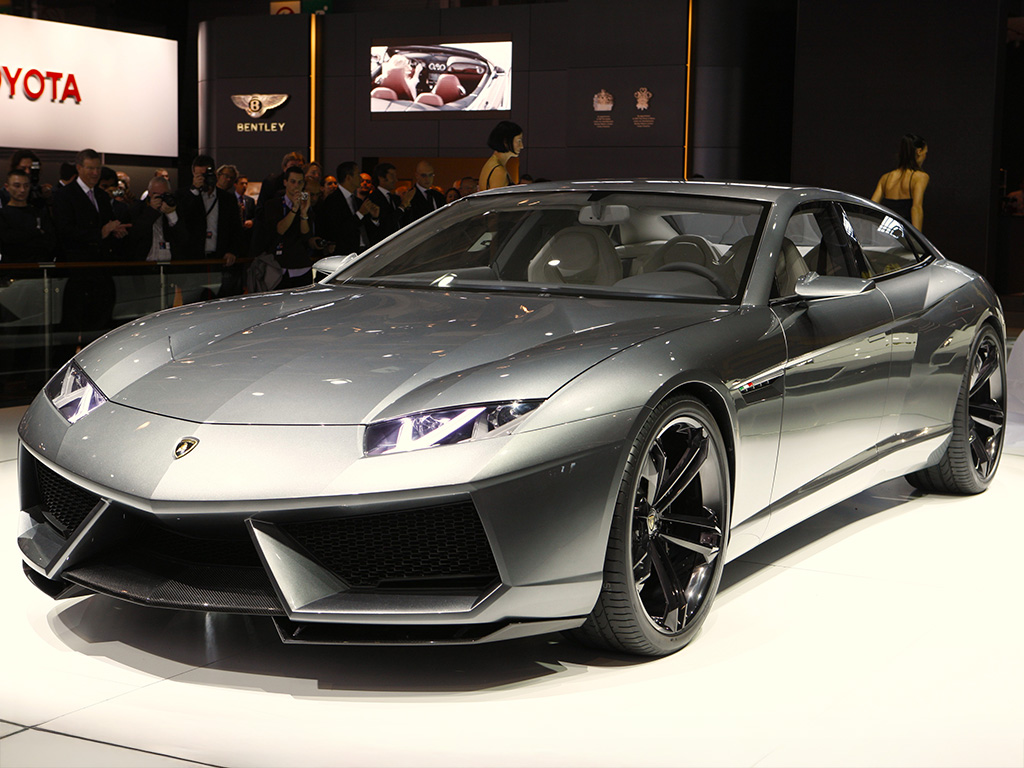
Lamborghini Estoque (2008)
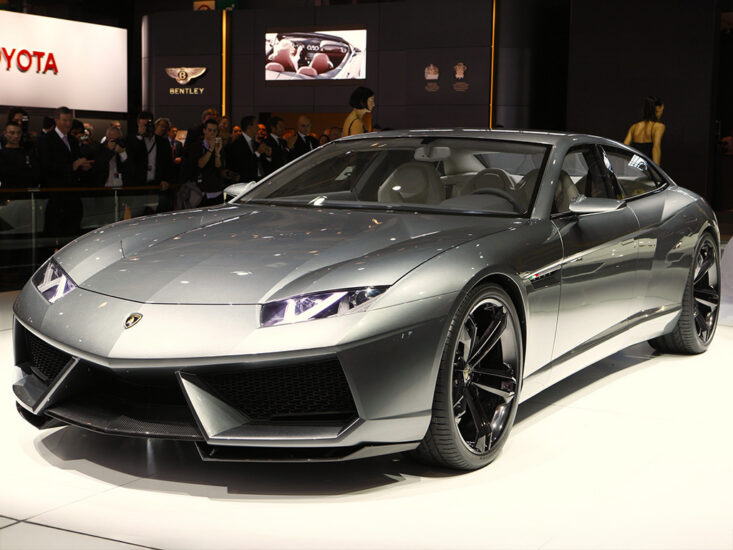
The stunning Estoque was unveiled at the 2008 Paris motor show, providing tangible proof of how a four-door Lamborghini could look. Stretching almost 5.2m long and 2m wide, the Estoque cut a striking profile, enhanced by the fact it was just 1350mm tall. Housed under its long pointy snout was the same 5.2-litre V10 as the Gallardo, but there was talk it could be replaced by a V12 or even a V8. Company CEO Stephan Winkelmann had hinted at the time the car could be in showrooms by 2011 but, sadly, the project never got the green light. It’s a pity, as it could have been an interesting (although no doubt more expensive) alternative to the Porsche Panamera.
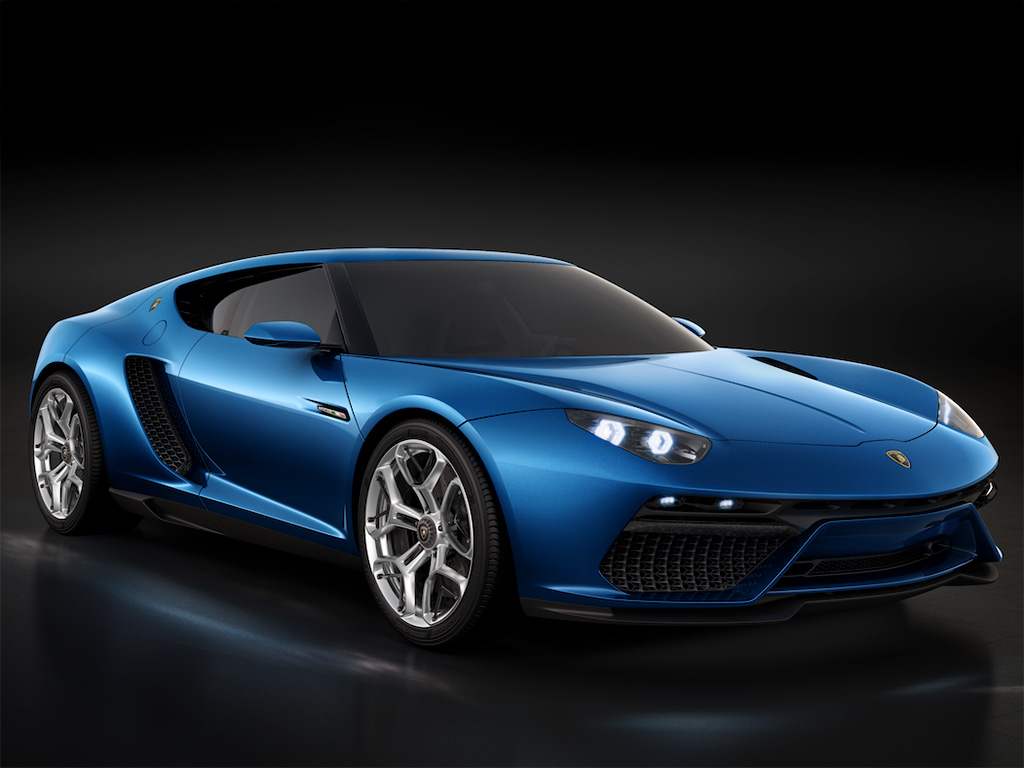
Lamborghini Asterion LPI 910-4 (2014)

Harking back to curvaceous Lamborghinis such as the much-loved Miura, the Asterion was an aberration from the brand’s sharp-edged new-millennium design language. The GT-esque coupe was underpinned by a carbonfibre monocoque borrowed from the Aventador, but its mid-mounted V10 engine was sourced from the Huracan. The Asterion supplemented these ingredients by twin electric motors on the front axle, powered by a lithium-ion battery pack. Although proposed as Lamborghini’s first hybrid model, the Asterion was shelved as Lambo’s customers favoured this tech only if it significantly ramped up performance (which it didn’t appear to in the Asterion). At the time, hybrid offerings such as the McLaren P1 and the Porsche 918 Spyder had massively raised the bar for petrol-electric hypercars.
Lamborghini Countach concept (2019)
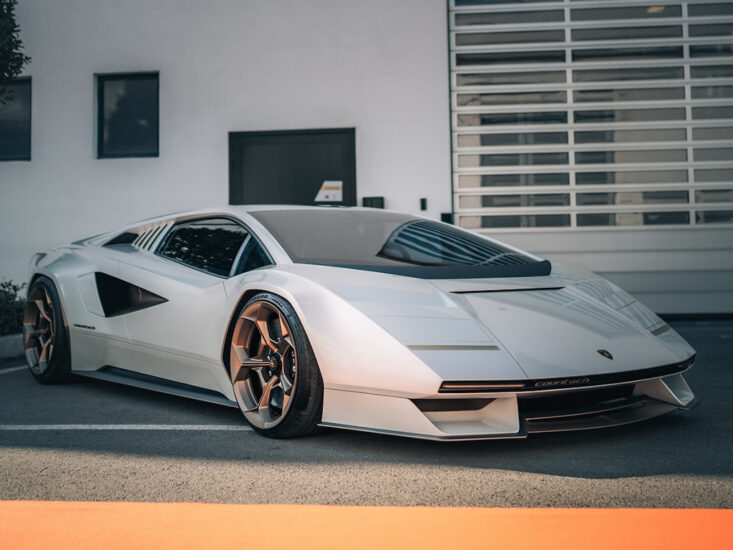
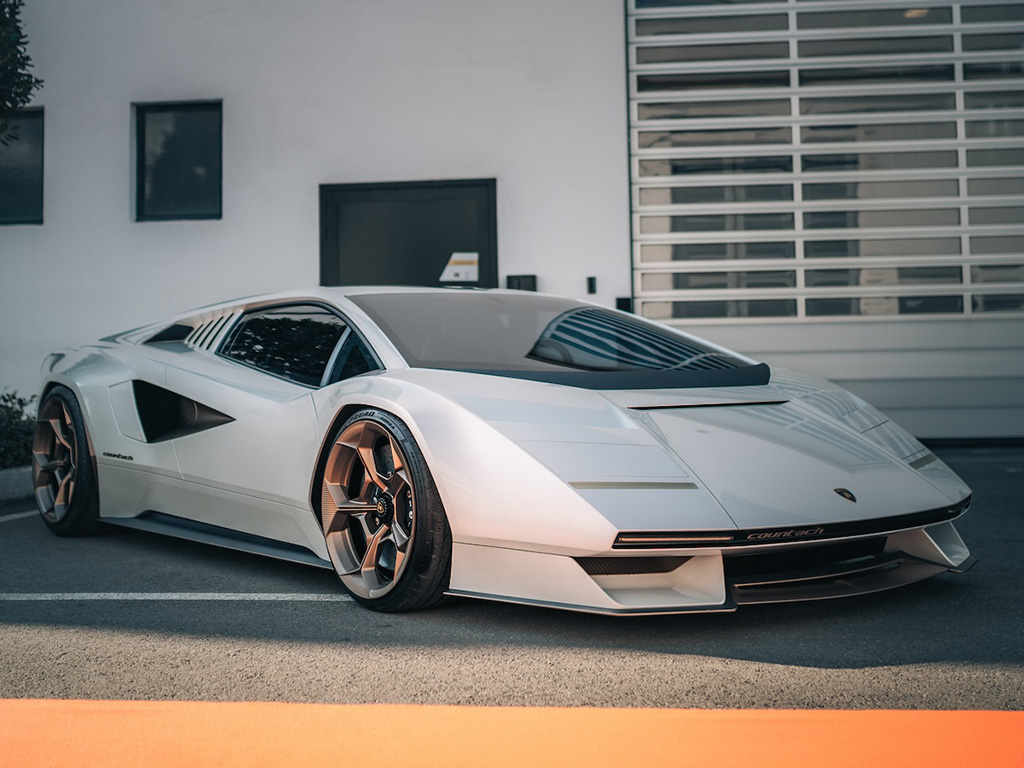
Lamborghini chalked up the 50th anniversary of the Countach LP 400 with the Aventador-based Countach LPI 800-4 – a limited-run model revealed in 2021 and of which the carmaker sold 112 examples for €2.5m each. However, what hasn’t previously been seen outside of the company is the concept that preceded the production car. A prettier modern-day take on the iconic 1971 Countach LP 400 than the LPI 800-4 that followed, the concept faithfully recaptured the 1970s Countach’s wedge-like profile, culminating in a sharply cut-off rear end. The concept’s nose and flanks (with much smaller air intakes than the LPI 800-4) were also superbly executed. However, a significant redesign was required to incorporate the cooling, aero and crash safety requirements of a roadworthy car, and the LPI 800-4 was the result.







Comments are closed. Please send an email if you have any feedback.