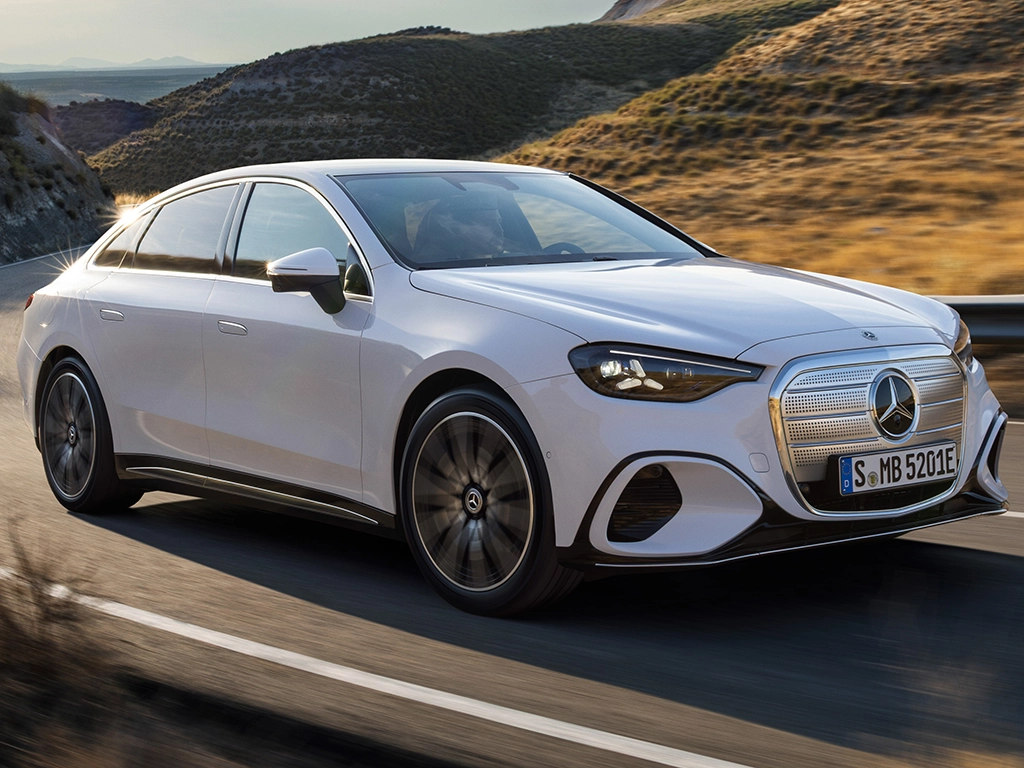
Interview: Mercedes-Benz Product Boss Klaus Rehkugler – V8s Will Live On, But the Future Is Electric
Mercedes-Benz is navigating one of the most significant transitions in its history, balancing the rapid development of electric vehicles with continued demand for combustion engines, particularly in markets such as the Middle East, where powerful petrol engines remain a major part of the brand’s appeal.
DriveArabia spoke with Klaus Rehkugler, Mercedes-Benz’s Head of Product Management and Global Training, to discuss how the German carmaker sees that transition unfolding. Among the key topics was the future of the V8, with Rehkugler saying there is enough global demand to keep the engine alive for at least another decade, even if a return to V8 power for the current AMG C63 appears unlikely.
The discussion also covered Mercedes-Benz’s long-term electric strategy, why the company expects EV and combustion models to increasingly share the same look and feel, the role of plug-in hybrids, EV depreciation and pricing, and why technologies such as hydrogen are unlikely to play a meaningful role for Mercedes in the immediate future.

Will there be another V8-powered C63 ever again?
While Mercedes-Benz has broadened the C-Class portfolio with the new battery-electric version, many brand faithfuls are lamenting the demise of the much-loved V8-powered AMG C63 sedan.
It’s been well documented that the model lost a major chunk of its fan base when Mercedes-AMG opted to turf the V8 in favour of a four-cylinder turbo hybrid powertrain, but Mercedes-Benz’s head of product management and global training, Klaus Rehkugler, poured cold water on the notion that a new fire-breathing C63 V8 could rise from the ashes.
“We have announced that you will see a true V8-powered performance car in the form of the CLE coupe and cabrio, but most likely not in the C-Class.”
“Although the four-door C63 was a very popular car in several markets, including North America, Australia, Japan, China and Korea, we’re not planning a return of the V8 model,” Rehkugler says.
“It comes down to a question of ‘can you get the amortisation back given the remaining lifecycle of the current C-Class?’ and the answer is ‘probably not’.”
However, Rehkugler stopped short of ruling out a V8 for the next-generation combustion C-Class, which is likely due by late 2028.
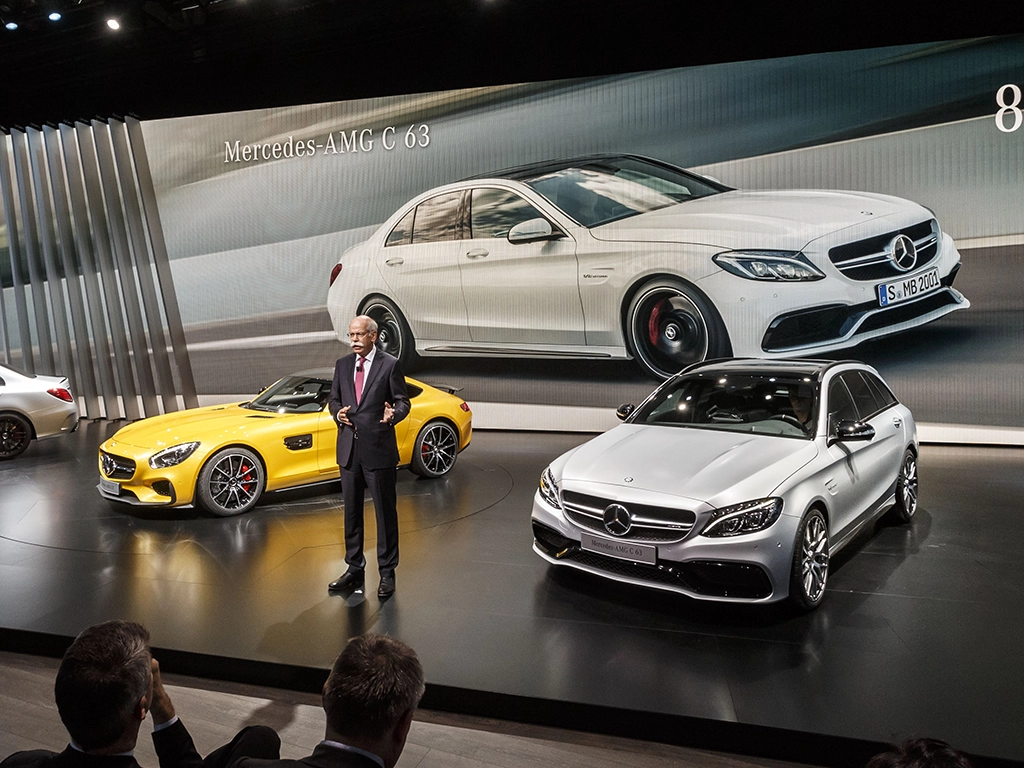
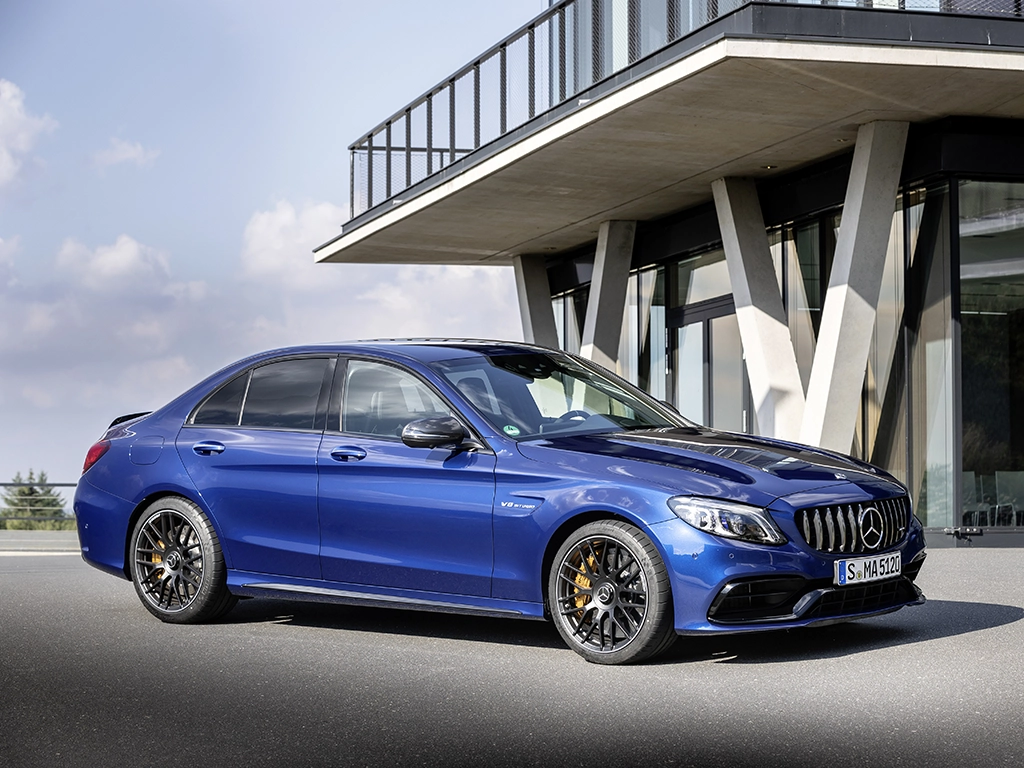
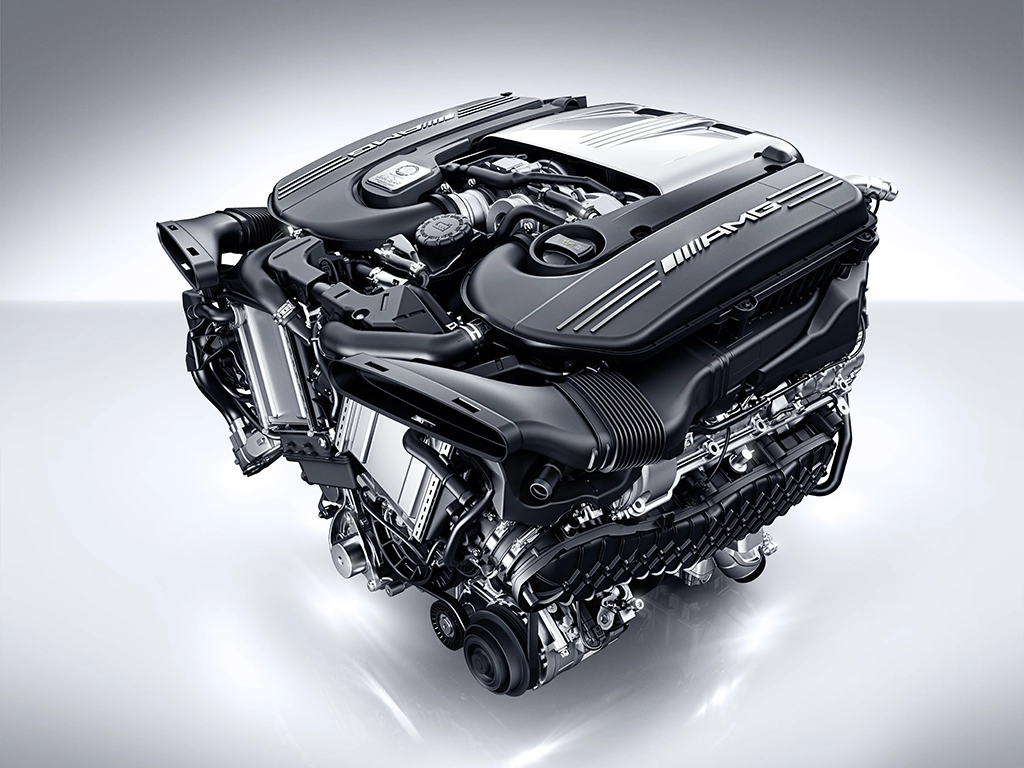
He adds that the V8 engine (in various applications that currently include the S-Class, AMG GT coupe, SL, G-Class, GLE etc) can be kept alive until “well into the 2030s… at least until 2035”.
“I think you need to have a regional look at it, but the fact remains that the V8 remains very popular in North America and the Middle East. I spent seven years in North America, and people there take great pride in saying ‘I drive a V8’, and this is linked not just to image, but also the driving characteristics of this powertrain.
“Overall, I think there’s enough global demand to keep the V8 alive for at least another 10 years, but maybe not so much in Europe with stringent CO2 regulations, which are very restrictive and punitive.”
Rehkugler also concedes that ever-tightening drive-by noise regulations mean that AMG V8s may not be as raucous as they once were. Even so, he adds “There’s the unmistakable feeling you get when you drive a V8, not just when you listen to it. The driving characteristics will continue to be truly V8-like, and there’s a lot we can do in that regard.
“But it’s true that noise regulations are getting more and more restrictive, especially when it comes to AMG V8s, controlled misfires and those types of things that customers just love and embrace.”
“The future is electric”: Rehkugler
Mercedes-Benz head of product management Klaus Rehkugler acknowledges that even though lower than expected customer demand for EVs in recent times has prompted several European brands to dial back their commitment to battery-electric vehicles, he sees it as a temporary phenomenon.
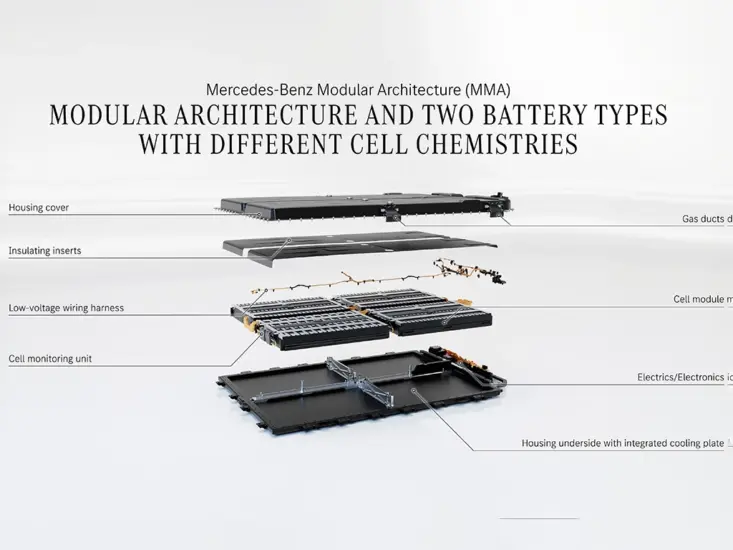
“We have clearly said that we’re not betting on electric only, but I’m a fundamental believer that the future is electric drivetrains. However, the speed that we get there will vary in different countries,” he says.
“I expect that we will see a BEV penetration of 40-50 percent in Europe rather soon… maybe by 2030. But beyond that I think the progression to 70, 80 and 90 percent will be different in Italy than, say, Croatia.
“So, rather than taking an ‘either-or’ approach, we will continue to offer BEVs and ICE models. We’ll also continue with plug-in models as there’s a certain type of customer who’s not ready to make the switch to BEV only.
“If you’re being penalised by legislation for driving a combustion vehicle, PHEVs represent a good bridging technology, and they will remain important until at least the mid-2030s and maybe even until 2040.
Depreciation has been a significant topic in relation to BEVs, but Rehkugler says this is largely a function of the list price. “If you have the list price is wrong, the resale price is also wrong,” he says.
“In the past the list price of an EV was significantly higher than that of a similar combustion vehicle. We are now moving to a strategy in which we have price parity between the two. As an example, the new GLC 250 electric at 60,000 euros is the same price as the combustion-powered GLC 250.
“With this pricing strategy you will also see that residuals of EVs and their ICE counterparts will come to the same level. You would have experienced with the C-Class electric you’ve just driven that you don’t need to make any compromises vis-à-vis the petrol version, so why should the residual price be lower?”
Rehkugler counters a suggestion that concerns about remaining battery life in used EVs remains a deterrent for some buyers by saying, “When you look at the state of health of an electric car that’s two or three years old, it’s actually not losing too much battery capacity, so confidence is gradually building up over time.
“When we look at residual values of used EVs over the past three or six months, we see that they’ve gone up. This is also linked to higher fuel prices, but there’s a definite trend of stabilising of EV residuals.”
Mercedes BEVs and ICE models to be virtually identical in look and feel
Mercedes-Benz’s initial forays into the EV space, specifically the EQE and EQS, differed completely in look and feel from the marque’s petrol and diesel models, but all of the marque’s recent releases – such as the CLA, GLB, GLA and C-Class – have brought battery and combustion models in close visual alignment with each other.
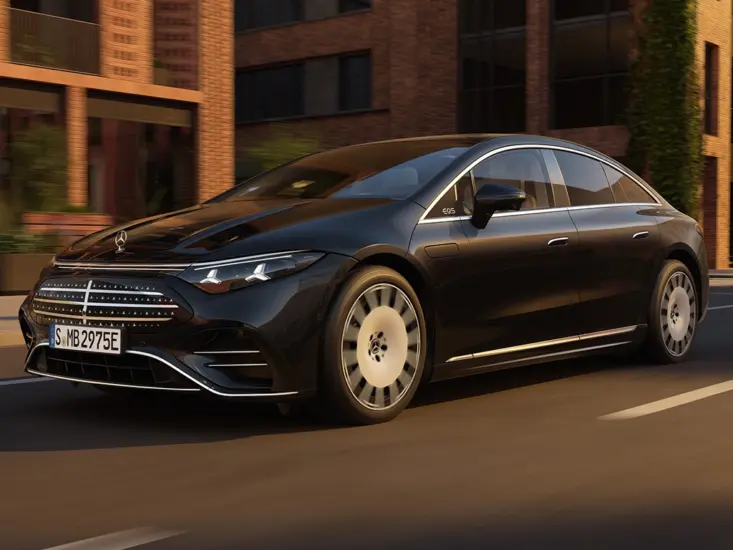
Rehkugler says this is by design as “The feedback from our customers is that they want to see cars with one face – different drivetrains, but the look and feel of the car has to be more or less identical. You’re seeing that already with the models on the MMA platform (CLA, GLA and GLB) as the ICE and BEV models differ very little visually.”
And while the new C-Class electric (designated W520) sits on a completely different platform to the upcoming refreshed combustion C-Class (the current W206 generation still has two or three years to run), the EV and ICE C-Class will not differ much outwardly, even though they share almost nothing under the skin.
Rehkugler says the aim for the future is to also have a much greater degree of architectural commonality between the two, explaining that Mercedes “needs to be cost-competitive as well as tech-competitive”.
“A modular approach, whereby ICE models and their EV counterparts share the same interior structure, seating structure and body panels will introduce much greater economies of scale,” he adds.
The timeline for the introduction of the C-Class electric means it’s out of sync with its petrol counterpart architecturally, but Rehkugler says a point in time will come when Mercedes can “close the zipper” and bring the two together.
Other clean technologies
As for hydrogen, synthetic fuels and other so-called clean technologies, Rehkugler says Mercedes is looking at all of them but not actively pursuing any.
“Whether hydrogen becomes a realistic topic from 2040 onwards remains to be seen, but I don’t see anything meaningful happening in that space for the next 10 to 15 years.”
“The question is not just whether you can develop such a technology, but the issue is more whether it’s cost competitive and whether there’s any customer demand for it. For the time being, neither the infrastructure nor customer demand is there for hydrogen to be viable.”

There are no comments. Be the first!