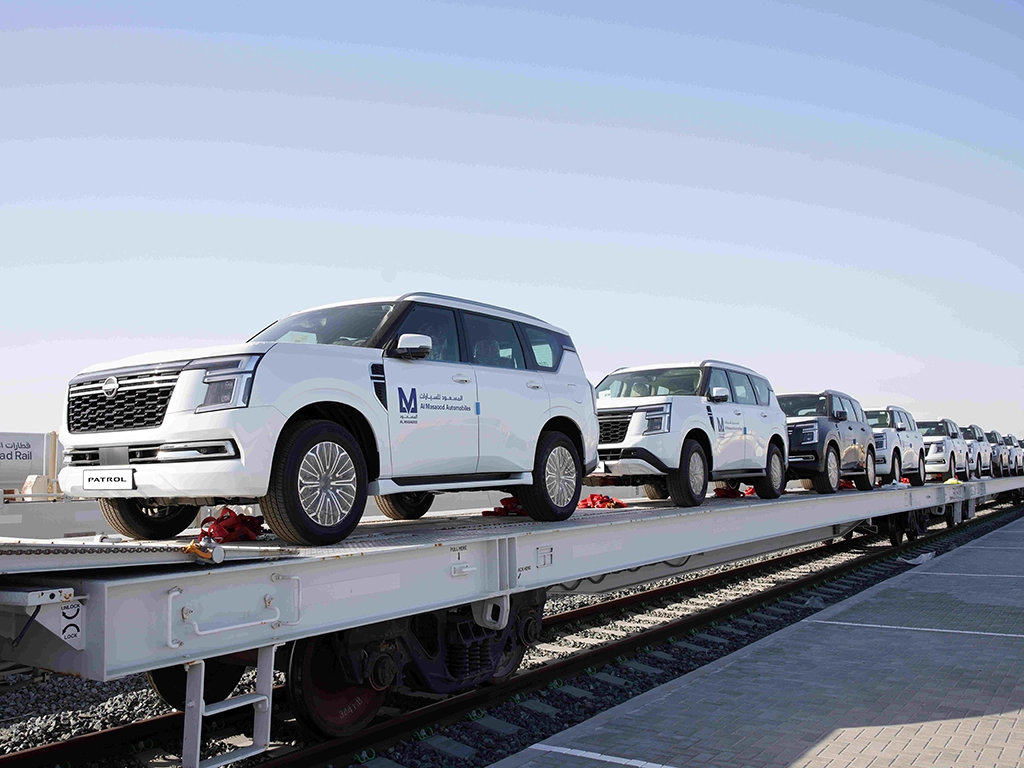
Al Masaood Automobiles completes first-ever vehicle rail shipment in UAE with Etihad Rail Freight
In a first for the UAE automotive sector, Al Masaood Automobiles has partnered with Etihad Rail Freight to complete the country’s first rail transport of finished passenger vehicles for a dealership.
The milestone shipment saw Nissan models transported from eastern coast ports to the dry port at the Industrial City of Abu Dhabi (ICAD), marking a shift in how vehicles can be moved across the UAE.
First step towards rail-based automotive logistics
Al Masaood Automobiles, the authorised distributor for Nissan, INFINITI and Renault in Abu Dhabi, Al Ain and Al Dhafra, becomes the first dealer in the UAE to adopt rail for finished vehicle transport.
The move highlights Etihad Rail Freight’s expansion beyond bulk cargo into high-value shipments such as passenger vehicles, signalling a broader diversification of the UAE’s logistics network.
Efficiency and reliability gains
By shifting part of the logistics chain to rail, the initiative aims to improve delivery timelines and consistency — a critical factor in vehicle distribution where delays can impact customer handovers and dealer operations.
The integrated approach allows vehicles to move more seamlessly from port to final destination, reducing reliance on road transport and streamlining the supply chain.
Sustainability angle
Rail transport also brings environmental benefits, offering a lower-emission alternative compared to traditional trucking. This aligns with the UAE’s broader push towards sustainable logistics and its Net Zero 2050 targets.
Bigger picture for the UAE market
While this is currently a pilot-style milestone, it signals where automotive logistics in the UAE could be heading. With Etihad Rail’s network continuing to expand, and passenger services expected to roll out from 2026, rail could increasingly play a role in vehicle distribution across the country.
For dealers and distributors, that could mean faster turnaround times, more predictable deliveries, and potentially lower long-term logistics costs, all of which ultimately feed into the customer ownership experience.

Comments are closed. Please send an email if you have any feedback.