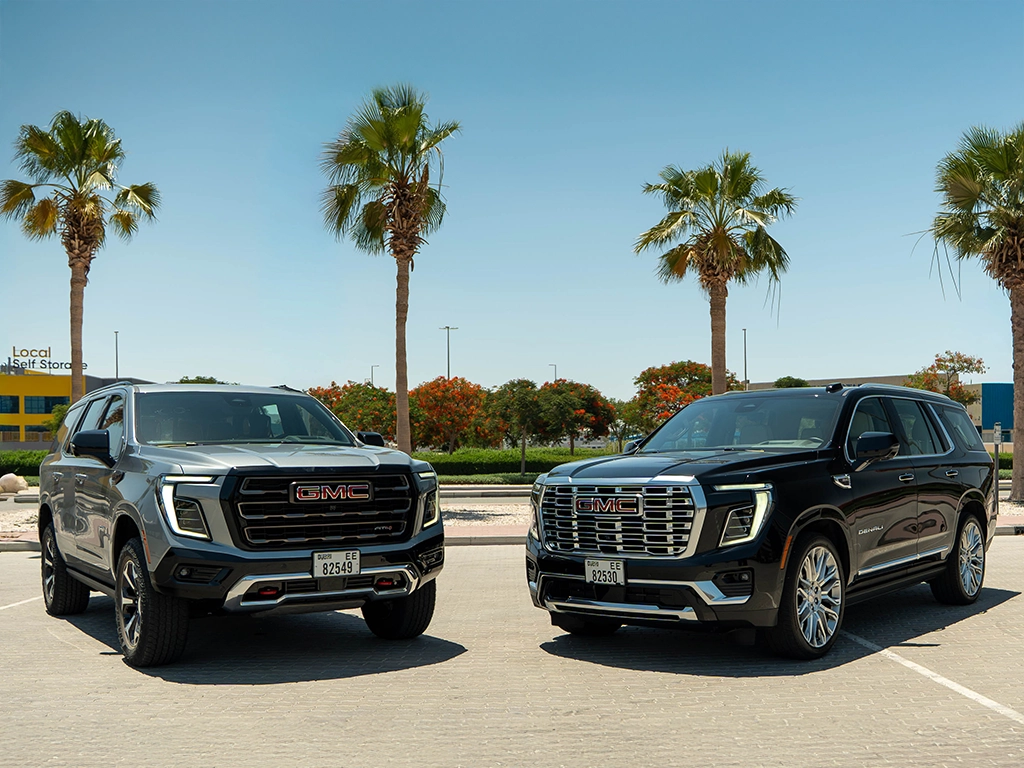
Summer, Handled: How the GMC Yukon Is Tested for GCC Heat
Extreme summer temperatures are part of everyday driving in the GCC. Vehicles are expected to remain comfortable while sitting in traffic, maintain dependable performance on long motorway journeys and cope with desert terrain where the engine, cooling system and air conditioning are placed under sustained pressure.
For the GMC Yukon, preparing for these conditions begins well before the vehicle reaches regional showrooms. General Motors Middle East conducts an extensive hot-weather validation programme designed to assess how its full-size SUVs perform in the temperatures, road conditions and driving environments found across the region.
GM says vehicles destined for the Middle East undergo extensive local and global hot-weather validation, including testing in extreme temperatures, varied terrain and demanding real-world driving conditions to help ensure they are suited to regional use.
Testing the Yukon in Real GCC Conditions
Hot-weather testing in the Middle East is about considerably more than checking whether the temperature gauge remains stable.
The GMC Yukon must be capable of operating in slow-moving city traffic during the peak of summer, cruising for extended periods at motorway speeds and travelling across loose sand and uneven terrain. Each environment places different demands on the vehicle.
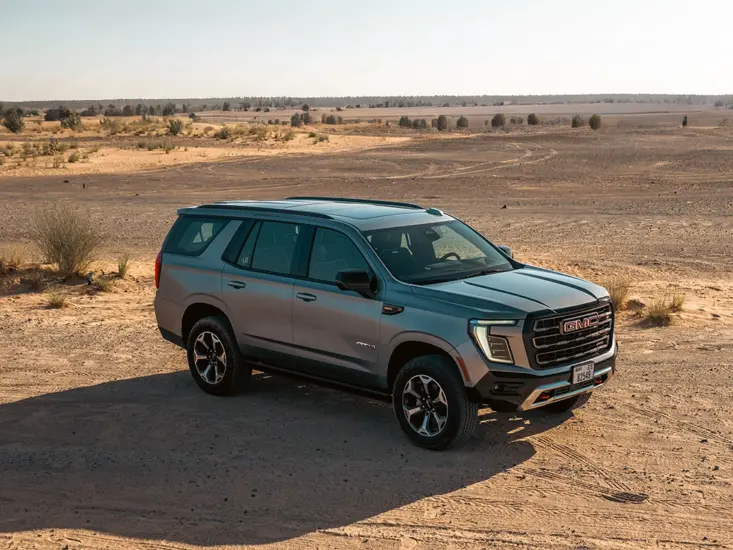
During city driving, the cooling and air-conditioning systems must continue working effectively even when there is limited airflow around the vehicle. Long-distance journeys introduce prolonged engine and transmission loads, while desert driving adds soft surfaces, wheel slip, low-speed manoeuvring and increased strain on the drivetrain.
GM combines this real-world environmental testing with virtual development methods. This allows engineers to study vehicle behaviour across a broad range of conditions while also validating the results in the environments where customers will actually use the vehicle.
Our Experience With the GMC Yukon
DriveArabia recently put the GMC Yukon through several driving situations that reflect the reality of ownership in the UAE.
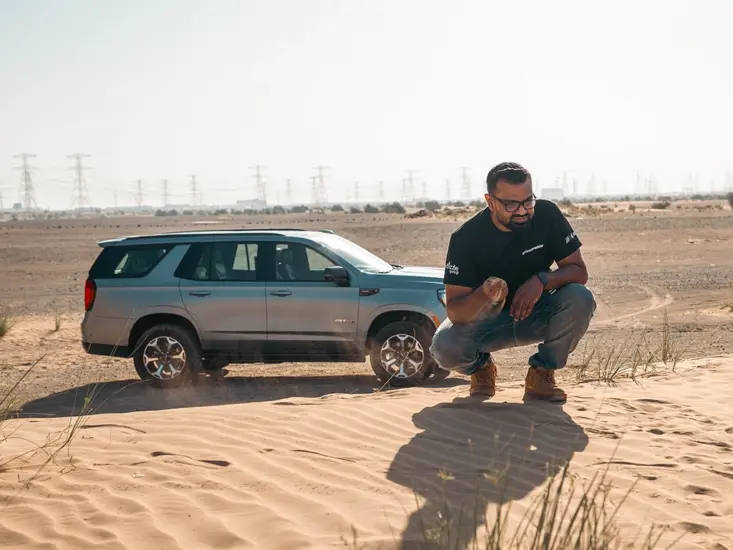
We drove the Yukon off-road in the desert, where loose sand, high temperatures and sustained load provided a demanding test of its powertrain, four-wheel-drive system and cooling performance. A large SUV must manage its weight carefully in these conditions, while maintaining predictable power delivery and keeping mechanical temperatures under control.
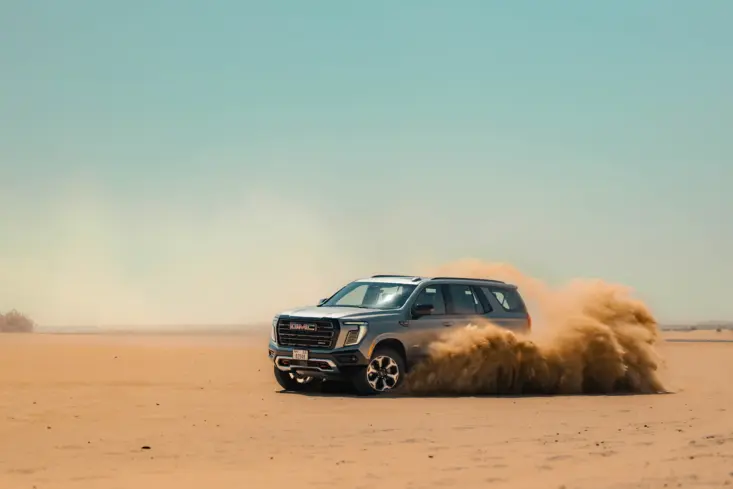
The Yukon remained composed across the sand, with the engine and transmission continuing to deliver consistent performance despite the heat. The four-wheel-drive system provided the traction required to keep the SUV moving through softer sections, while the suspension dealt well with uneven terrain.
Our drive also included extended road journeys through the city and on the motorway. These conditions may appear less demanding than desert driving, but they can place significant strain on a vehicle during the GCC summer.
Cabin temperature can rise rapidly after a vehicle has been parked in direct sunlight, while the air-conditioning system must cool a large three-row interior containing multiple passengers. The Yukon’s system brought the cabin temperature down effectively and continued to distribute cool air throughout all three rows during the journey.
For families, this is one of the most important aspects of full-size SUV ownership in the Middle East. Strong performance figures matter, but daily comfort often depends on how quickly the cabin cools and whether rear passengers receive sufficient airflow during longer journeys.
Evaluating the Complete Vehicle
GM’s regional validation programme assesses the vehicle as an interconnected system. The powertrain and cooling system receive particular attention, but engineers also evaluate the air conditioning, sensors, electronic systems and other components that can be affected by prolonged exposure to high temperatures.
Modern vehicles rely heavily on cameras, radar systems, displays, control modules and electronic driver-assistance features. These components must continue operating consistently even when exterior temperatures are extreme and the vehicle has spent several hours parked in the sun.

Interior materials are another consideration. Seats, dashboard surfaces, trim panels, switches and screens are repeatedly exposed to heat and ultraviolet light throughout the vehicle’s life. Regional testing helps manufacturers evaluate how these areas cope with the Middle East climate over extended use.
Heavy-load testing is equally relevant for a vehicle such as the Yukon. Owners may travel with seven or eight passengers, luggage and additional equipment, placing greater demand on the engine, brakes, suspension and air-conditioning system. Testing under these conditions helps engineers identify potential issues before vehicles are delivered to customers.
Developed With the Middle East in Mind
The GMC Yukon’s size, towing ability, passenger capacity and off-road capability have made it a familiar choice across the GCC. Those qualities also mean it must perform reliably across a particularly wide range of conditions.
It may be used for school runs and daily commuting during the week, long inter-emirate journeys at the weekend, or cross-border road trips to neighbouring GCC countries during extended holidays. On these longer journeys, the Yukon must carry passengers and luggage comfortably while maintaining dependable performance, effective cabin cooling and stable high-speed cruising for several hours at a time.
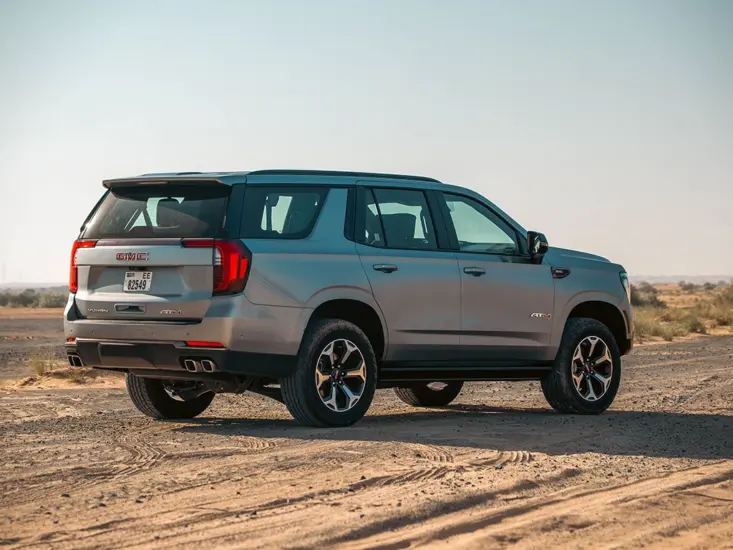
It may also be called upon for desert trips and off-road driving, where soft sand, uneven terrain and sustained mechanical loads place additional pressure on the powertrain and cooling systems. During summer, it must handle all of these demands while exterior temperatures approach or exceed 50 degrees Celsius in some parts of the region.
Our time with the Yukon showed why regional testing matters. The SUV handled desert driving without a noticeable drop in performance, remained stable and comfortable during longer road journeys and maintained a cool cabin across all three rows.
The Yukon is not simply expected to survive the GCC summer. It must continue delivering the performance, comfort and dependability expected from a full-size SUV, whether tackling daily city driving, travelling between emirates or covering long distances across the region.

There are no comments. Be the first!