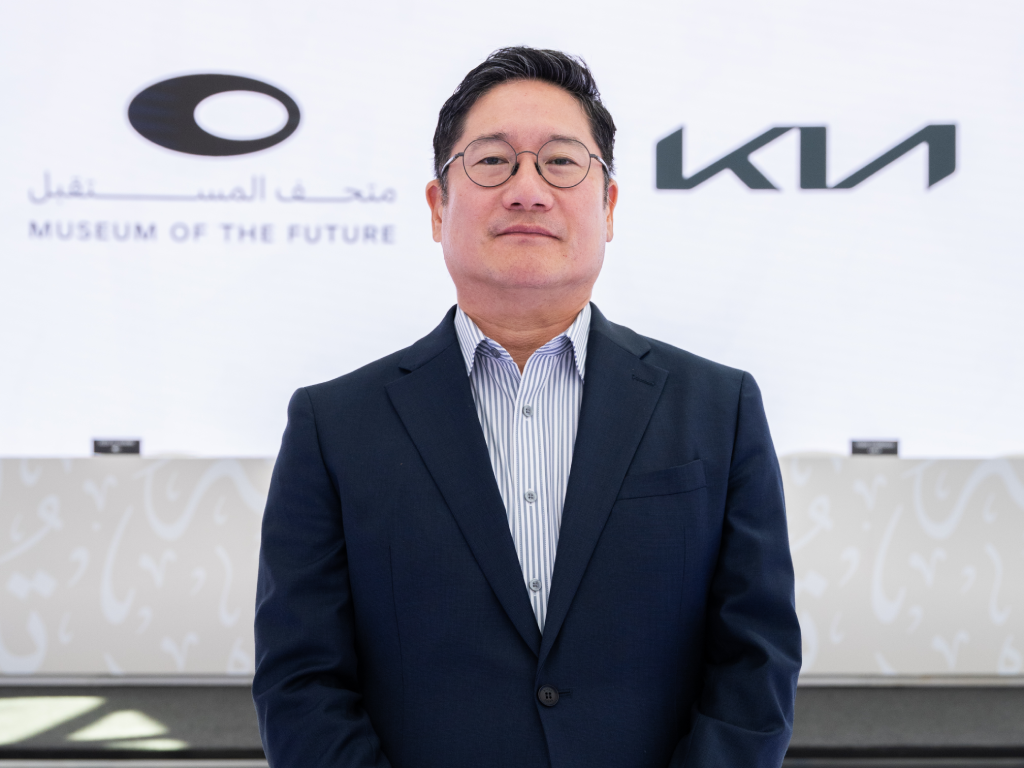
Interview: Kia Middle East and Africa President Hoo Gon Kim on PBVs, EV Growth and the Future of Regional Mobility
Kia is preparing to expand its role in the Middle East and Africa beyond traditional passenger vehicles, with electric mobility, purpose-built vehicles and connected business solutions becoming increasingly important parts of its regional strategy.
In an exclusive interview with DriveArabia, Mr Hoo Gon Kim, President of Kia Middle East and Africa, discussed the company’s response to regional supply-chain challenges, the potential of the new Kia PV5, and why the UAE could become an important launch market for Kia’s Platform Beyond Vehicle, or PBV, business. He also spoke about charging infrastructure, local vehicle conversions, wheelchair-accessible mobility and Kia’s plans to combine electric vehicles with software, fleet-management tools and connected services.
How are things with Kia given the current supply chain challenges in the region?
We see thorough demand despite the region having faced several supply chain bottlenecks earlier this year. Kia’s regional business in the Middle East remains strong. In Iraq, for example, Kia is currently number one among Chinese and Korean brands; we are still maintaining a strong market position.
The port situation is also very important for vehicle delivery. Kia remains one of the major players here, and we see crisis as an opportunity for more growth, one way or another. Supply shortages give us a chance to strengthen our market share. That is the positive side I see.
Our philosophy is simple: regardless of market conditions, we remain focused on supporting our customers, dealers, and partners. The lessons learned from recent supply chain bottlenecks have further strengthened our readiness and agility, and we are confident in our ability to respond effectively to any future market changes.
We continue to see strong demand across the Middle East, which is a testament to the strength of the Kia brand and our product lineup. Today, Kia holds the No. 1 automotive brand in Iraq and No. 3 position in KSA, demonstrating our resilience and strong market presence despite external challenges.
The port and logistics situation naturally plays a critical role in vehicle availability and delivery timelines. However, we have always maintained a forward-looking approach, ensuring contingency plans are in place to minimise disruptions and maintain customer satisfaction. In fact, we often view periods of challenge as opportunities to strengthen our operations, enhance our competitiveness, and grow our market share.
Let’s talk about PBV, or Platform Beyond Vehicle. When you launched the PV5, did you do market research? Do you feel the Middle East market is ready for this kind of vehicle?
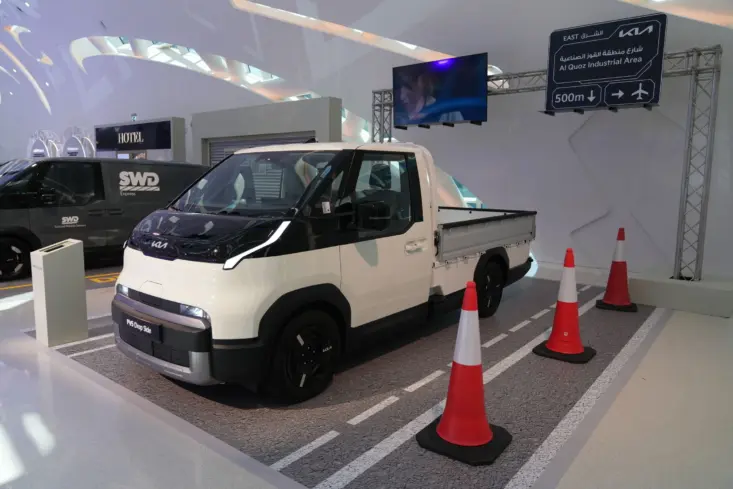
Kia sees itself as a PBV originator. We are moving from traditional vehicle manufacturing towards complete business solutions. That is what makes PBV different. Customers today have very diverse requirements, and our role is to respond to those needs in a much more integrated way.
In Korea, we have a dedicated PBV factory, and we work very closely with conversion companies there. Some of these companies are located within or closely connected to our manufacturing ecosystem, which allows us to control quality and respond much more quickly to customer requirements.
Other companies only produce the base vehicle and then outsource the conversion work externally. In Kia’s case, we manage the quality ourselves and can make decisions more quickly to meet customer needs in a timely way. This is one of our key differentiators.
Quality is especially important. Because Kia works directly with qualified conversion companies through our own production ecosystem, we can manage quality standards much more effectively than if the work were handled entirely outside the factory environment.
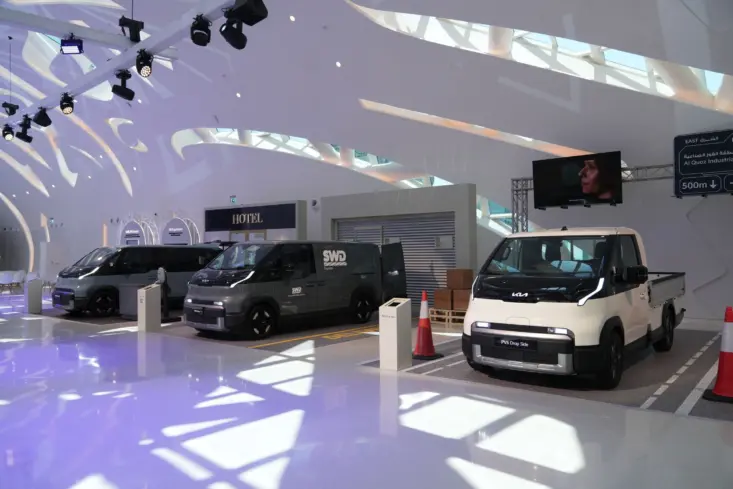
At Kia, we see PBVs as much more than vehicles—they are tailored business solutions designed around customer needs. Through extensive market analysis and customer engagement, we believe the Middle East is increasingly ready for this concept, particularly as sectors such as logistics, e-commerce, last-mile delivery, passenger transport, tourism, mobile retail, healthcare, and service fleets continue to grow.
What differentiates Kia is that we see ourselves as a PBV originator. In Korea, we have a dedicated PBV factory named “Hwaseong EVO Plant” and work closely with certified conversion partners within our production ecosystem. This allows us to manage quality, accelerate customization, and respond to customer requirements much faster than traditional conversion models where modifications are outsourced after production.
The benefits of Kia’s PBV platform include: Customised business solutions, Higher efficiency and productivity, Lower operating costs, Flexible applications, Factory-backed quality standards with integrated conversion solutions.
We believe the Middle East presents a strong opportunity for PBVs, driven by rapid economic development, growing logistics networks, smart city initiatives, and increasing demand for specialised mobility solutions. For Kia, PBV is a strategic growth pillar and a key step toward the future of mobility.
You have a lot of different configurations, like cargo, wheelchair-accessible and passenger vehicles. Which do you think will be most in demand?
There is a promising opportunity in commercial transport and logistics, especially with the growth of e-commerce and last-mile delivery. Customer expectations are changing quickly, and people want fast and convenient delivery. That creates strong demand for last-mile delivery vehicles, so I think that will be one of the biggest growth areas.
The UAE is a very modern and advanced market compared with many, so it is a very good hub for us to begin expanding these opportunities. Saudi Arabia is also an important market. There is a clear push there to electrify public transport and taxis over time, although progress is moving a little more slowly at the moment because of the broader economic environment. For now, I think the UAE is the right market for us to focus on first.
The real value of the PV5 is not just the vehicle itself, but its ability to be customised around the specific needs of each customer. Whether it is a delivery company, hotel operator, mobility provider, or government entity, Kia’s PBV platform allows us to deliver tailored solutions that improve efficiency, productivity, and operational performance. This flexibility is what we believe will make PBVs a significant growth area in the region in the years ahead.
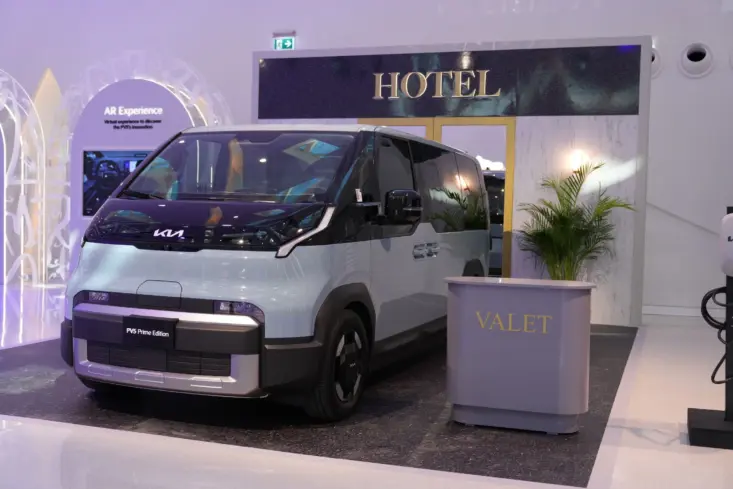
That said, one of the key strengths of Kia’s PBV strategy is flexibility. The PV5 can be adapted for a wide range of applications, including:
- Cargo and last-mile delivery
- Passenger transport and shuttle services
- Wheelchair-accessible mobility solutions
- Ride-hailing and taxi operations
- Hospitality and tourism transport
- Mobile retail and service vehicles
- Specialised fleet and business applications
The UAE is a particularly attractive starting point because it is one of the most advanced and innovation-driven markets in the region.
You have partnered with charging networks. How strong is that network, and how does it give customers confidence that they can actually use an EV from point A to point B?
Charging is a very important issue, not only for the PV5 but for EV adoption more broadly. Electrification in the Middle East is still developing. In city areas, there are already many charging stations, but outside major cities the infrastructure is still limited.
I drive an EV myself, and sometimes even I feel some concern when travelling longer distances because there are not always enough charging stations on the route. So this remains one of the main areas that still needs to be developed, together with governments and infrastructure partners.
We are working with charging companies in the UAE and other markets to support the expansion of charging infrastructure. The UAE is currently one of the strongest markets in the region in this regard. In some other markets, such as Saudi Arabia, the challenge is greater because of the longer distances and the geography.
So, while EV adoption is moving forward, charging infrastructure remains one of the key issues that needs to be addressed to accelerate electrification across the region.
Charging is a very important issue, not only for the PV5 but for EV adoption across the region. While charging infrastructure in the Middle East is still developing, the UAE is currently one of the most advanced EV markets, with a growing network of public and private charging stations. We are also working closely with charging providers and ecosystem partners to support further expansion.
From a product perspective, the PV5 has been designed to give customers confidence in daily operations. Depending on the variant, it offers battery options of approximately 51.5 kWh and 71.2 kWh, with a driving range of up to 412 km (WLTP). It also supports 150 kW DC fast charging, enabling the battery to recharge from 10% to 80% in around 30 minutes, helping businesses maximise vehicle uptime.
For many PBV applications such as last-mile delivery, logistics, passenger shuttles, hospitality transport, and fleet operations, vehicles typically operate on predictable routes and can be charged at depots or business locations, making electrification both practical and efficient.
While charging infrastructure remains a key area for continued development, particularly for longer intercity journeys, we are seeing strong progress across the region. Combined with the PV5’s range, fast-charging capability, and flexible business solutions, we believe the foundation is in place to support the next phase of sustainable mobility in the Middle East.
In terms of customisation, I know you partner with conversion companies. If a customer wants to buy a vehicle and do some kind of custom conversion, what is the process? Is everything done through Kia, or does the customer have to deal with the conversion company directly?
Commercial vehicles involve many different types of customer requirements, so the process can vary depending on the market and the use case.
Our priority is to develop the right solutions in Korea, but we also recognise that we cannot meet every need centrally. There are local regulations in each country, and those requirements can differ significantly. In those cases, we need to collaborate with local conversion companies in each market.
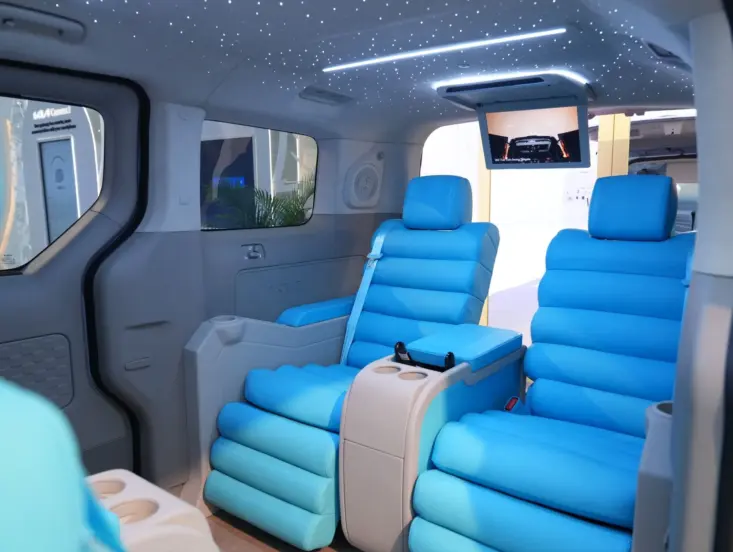
In Dubai, for example, there are many advanced and capable conversion companies, and in Saudi Arabia there are also different types of companies that can support local requirements. So, our approach is to evaluate the available partners, looking at quality, price and capability, and then work with the most suitable companies.
For the base model, development is typically handled in Korea, but for highly localised requirements we can collaborate with local conversion companies in the market. We already have many presentations and discussions underway with potential partners not only in the Middle East, but also in Europe. So, we are building that ecosystem.
We already have identified conversion partners within the Kia ecosystem, and we have also found local conversion partners in this region. So, I do not see this as a major issue. We already have the framework in place.
One thing I found particularly interesting was the wheelchair-accessible vehicle. Are you the only ones offering that directly from the factory?
Unlike many solutions that rely on aftermarket conversions, the PV5 Wheelchair Accessible Vehicle (WAV) has been developed as part of Kia’s dedicated PBV strategy, allowing us to provide a factory-engineered mobility solution with consistent quality, safety, and reliability.
The PV5 WAV offers several unique benefits, including Easy side-entry access for wheelchair users. Low-floor architecture for easier boarding and improved accessibility. Secure wheelchair restraint systems for enhanced safety.
We believe this solution has strong potential across the Middle East, particularly for transport providers, healthcare organizations, airports, hotels, government entities, and mobility services. It also reinforces our PBV vision: moving beyond simply manufacturing vehicles to providing purpose-built mobility solutions that improve people’s daily lives.
And the PV7 — is that coming to market soon, or is that still for later?
The PV5 is the first model we are launching, and that is our immediate focus. The PV7 is our larger PBV model, and it has strong potential in this region, for both passenger and cargo transport.
For example, in Saudi Arabia there may be opportunities linked to pilgrim transport, where operators need to move large numbers of people. In that context, a vehicle like the PV7 could be a very good fit. It can carry more passengers and could open up additional opportunities in regional transport applications.
So, I think the PV7 has strong long-term potential in our region and could become an important model for volume growth in future.
Earlier we also spoke about the digital ecosystem and how Kia provides hardware and software together. How does that work in practice? If a customer buys the vehicle, do they get an app? Or do you build a system for them?
PBV is not only about the hardware. It also includes software, services and digital transformation tools. Kia is developing that software capability as part of the PBV ecosystem, so we are not only selling a vehicle, but also bringing a digital operating solution.
We already have our own technology, and we are working with communications and technology partners to expand that capability across different countries. If a customer buys the vehicle, they can also access a solution programme that supports operations and fleet management.
Of course, each country has different regulations and connectivity requirements, so there may be some local adaptation needed, and we have to work with telecom and technology companies in each market to make sure everything works properly. But in the UAE, for example, we already have the foundations in place and do not see major issues in implementing these solutions.
And besides that, are there any other services or solutions you provide that you’d like to mention?
We are developing a broader ecosystem together with selected customers and partners. This is still evolving, but the goal is to provide a more complete digital solution, not just a vehicle. That includes software, operational support and other tools that can help customers manage their business more effectively.
We are building a complete mobility ecosystem that goes beyond the vehicle itself. Our vision is to combine purpose-built EVs with advanced software, connected services, and fleet management solutions to help customers operate more efficiently.
Looking ahead, AI and data-driven technologies will play an increasingly important role, enabling smarter fleet operations, predictive maintenance, real-time monitoring, and a more seamless customer experience. Kia is also advancing its software-defined vehicle strategy, allowing vehicles to become more intelligent and continuously enhanced through software updates.

There are no comments. Be the first!